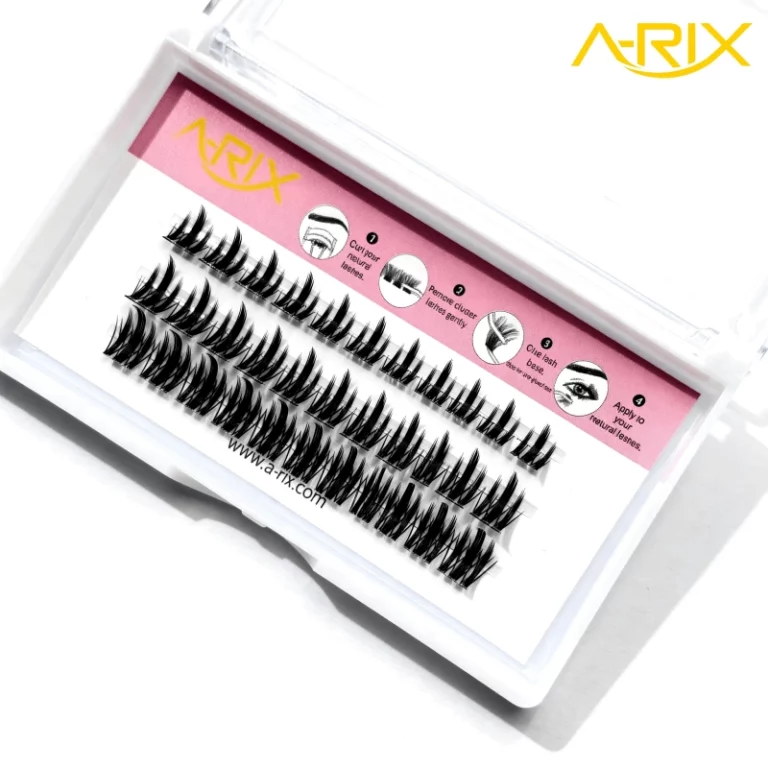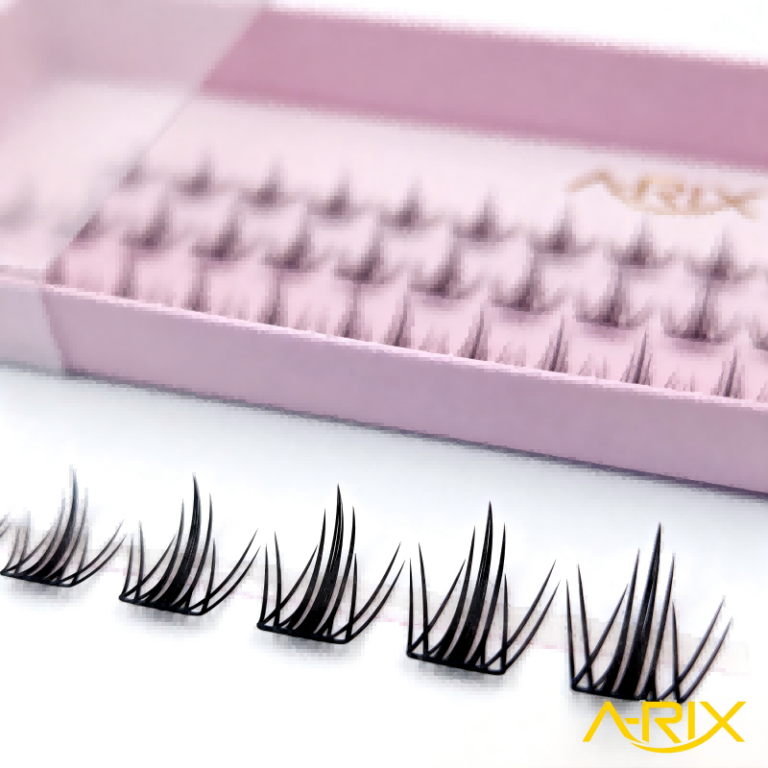
Wear tips, how to choose the right style, and what goes into developing truly natural-looking lashes in 2026.
The “natural lash” look isn’t just an aesthetic preference—it’s also where the market is going. Industry reports estimate the global false eyelashes market at about USD 1.9B in 2024 and continuing to grow through 2030. Social and creator-led beauty shopping keeps accelerating discovery-to-purchase behavior for lashes. And trend coverage based on Spate data points to rising interest in at-home lash solutions like cluster lashes and magnetic lashes (reported as up over 50% across Google and TikTok year-over-year).
That means: consumers want lashes that look like their lashes—only better, and they want them to be easy, comfortable, and reusable.
Below is a practical, market-informed guide you can use as a blog post (and as an internal checklist for product & factory development).
1) Choose Lashes That “Disappear” on the Eye
A natural result starts with product selection. The most common reason lashes look fake is not the length—it’s the band, fiber taper, and density pattern.
What to look for when shopping
- Thin or “invisible” band: The band should blend into the lash line. Thick black bands can look like a strip of plastic unless you’re intentionally going for eyeliner glam.
- Wispy, staggered lengths: Natural lashes don’t grow in a perfect line. Wispy designs use varied lengths and spacing so the lash line looks organic.
- Tapered tips: Square-cut tips reflect light and read “synthetic.” Tapered tips read “hair-like.”
- Shorter inner corner: A natural mapping usually starts shorter inside, peaks around the iris/outer third, then tapers.
Pick a style based on your eye + your goal
- Everyday natural: wispy, light density, max length typically around 10-12mm (depends on eye size)
- “Extensions” look at home: soft spike/wispy layering, slightly longer outer third, light-to-medium density
- Hooded / small eyes: avoid overly long inner corners; choose open-eye mapping (peak near center)
2) Application Tricks That Instantly Make Lashes Look Real
- A) Trim from the outer edge (almost always)
Most people trim from the inner corner and lose the natural taper. Trimming a little from the outer edge often preserves the inner-corner softness.
- B) Use the “under-lash” illusion (without placing under the lash line)
You don’t need to place lashes under your natural lashes to get that seamless look. What matters is placement angle:
- Aim the lash band slightly upward, so the fibers lift and blend into your natural lash direction.
- C) Press—don’t “stick and pray”
After placing:
- Press the band into the lash line with an applicator
- Then pinch your natural lashes + falsies together (gentle squeeze), so they behave like one set
- D) Hide the band with micro-tightlining
A tiny amount of dark brown/black liner between the natural lashes (not a thick wing) makes the band vanish.
3) The “Natural Look” Depends on Fiber Technology, Not Marketing Words
Terms like “mink” and “faux mink” are often used as a feel/look category, not necessarily literal animal hair. Many suppliers describe “mink” style lashes as synthetic fibers (commonly PBT) designed to mimic softness and taper, and they offer thicknesses such as 0.03 / 0.05 / 0.06 / 0.07 in pro lash materials.
Why 0.05 matters
In pro lash materials, 0.05 is often used to create a softer, lighter, more “airy” look while still holding curl—especially for styles aiming at natural volume without heaviness. Some industry content describes 0.03-0.07mm as a practical diameter range depending on the desired effect.
For strip lashes and clusters, the principle carries over: finer fibers + better taper + smart density = natural.
4) What Product Developers Should Watch Closely
If your brand is developing “natural-looking lashes,” here are the technical factors that actually move the needle:
Band engineering
- Band thickness tolerance (too thick = visible; too thin = loses shape)
- Flexibility vs. memory (should flex to different eye curves but not warp)
- Adhesion surface design (how glue grips without clumping)
Fiber & curl consistency
- Fiber diameter consistency (one batch thicker = instantly less natural)
- Curl uniformity within a style (uneven curl reads messy, not wispy)
- Heat stability (curl should hold through storage + transport)
Density mapping (where “natural” is won or lost)
- Natural styles avoid uniform density
- Better patterns use micro gaps and staggered lengths so the lash line breathes
Comfort + wear tests
A natural lash that irritates the eye won’t be repurchased. Practical tests should include:
- 8-10 hour wear comfort
- Corner lift rate across different eye shapes
- Reuse cycles (how many wears before the band deforms)
5) What Our Factory Is Actively Working On
To meet where the market is heading—natural aesthetics + easier application + sustainability—our factory is focusing on three key areas:
1) Eco-focused materials and packaging direction
Mainstream brands are already marketing plant-derived fibers, organic cotton bands, and recyclable / biodegradable packaging as a differentiator.
In development, this means balancing:
- softness + curl retention
- durability across multiple wears
- supply stability and QC repeatability
2) 0.05 faux mink fiber development (softness without heaviness)
We’re actively using 0.05 faux mink-style fiber options to achieve:
- lighter visual density
- better blending with natural lashes
- “extension-like” softness without looking glossy/plastic
3) Style R&D based on real consumer demand
Trend reporting continues to highlight the growth of at-home lash enhancement, including magnetic and cluster options.
Our style development is therefore centered on:
- natural wispy sets for everyday
- “your lashes but better” mapping (soft spikes, airy layers)
- designs optimized for faster application and better band invisibility
- Quick Checklist: If Your Lashes Still Don’t Look Natural
- Band visible? → go thinner band + tightline, reduce glue
- Too heavy? → lower density, shorter length, finer fiber
- Outer corner lifts? → trim length, use stronger hold on corners, press longer
- Looks “too perfect”? → choose wispy / staggered mapping, not uniform
Closing thought
The natural lash look is no longer a niche—it’s the mainstream expectation. With a growing global market and rapidly rising interest in at-home lash solutions , brands that win will be the ones that treat “natural” as an engineering problem: band design, fiber quality, density mapping, comfort testing, and sustainability, all working together.