In beauty market, trends usually start as a small shift in consumer taste, then show up in editorial coverage, product launches, search behavior, and finally in what people actually wear every day.
For years, black lashes dominated the category because they offered maximum contrast, definition, and drama. But the market is clearly making room for something softer.
Brown mascara has gained major traction as consumers move toward more natural, wearable eye looks, while editors and artists are increasingly talking about soft-focus beauty, tonal makeup, and “less harsh” lash definition.
That combination matters. When the overall lash category is growing, and beauty aesthetics are shifting toward soft glam, brown lashes stop looking niche. They start looking inevitable.
Why brown lashes are trending now
The biggest reason is simple: beauty consumers want definition without heaviness.
Allure’s coverage of brown mascara frames the appeal perfectly.
In its roundup of the best brown mascaras, the publication notes that brown works for people who find black lashes too dramatic, and quotes makeup artist Katie Jane Hughes describing softer lash colors as feeling fresher and making the rest of the makeup read as less “makeup-y.” Allure also positions brown as a low-risk, high-reward option for anyone leaning into a softer beauty direction.
That editorial view lines up with what other beauty publications are seeing. Vogue reported that celebrity makeup artists were hearing more requests for brown mascara, and Ilia’s founder said customers had been asking for a brown version for years, including nearly a thousand direct requests in roughly the past year alone. Vogue also emphasized that brown shades create a long-lash effect in a softer tone and can flatter both lighter and darker natural lashes.
Glamour connected the same trend directly to minimalist soft glam
Arguing that brown mascara looks more natural across skin tones and features, making it an especially good fit for daytime or understated glam looks.
Once that preference becomes established in mascara, it is only logical that it moves into false lashes as well. Consumers who love the softer effect of brown pigment will eventually want the same finish in strip lashes, cluster lashes, and under-lash systems.
The soft glam connection
Brown lashes make sense because soft glam itself has changed.
It is no longer just full-coverage skin with neutral eyeshadow and fluffy lashes. The modern version is more diffused, lighter in texture, and more convincing in daylight.
Allure’s guide to soft glam explains that the look starts with a luminous, hydrated base that still reads soft even when polished. That definition matters because it shows soft glam is not about being invisible; it is about looking refined without appearing hard-edged.
Vogue described a related 2025 direction as “soft focus tonal beauty,” using phrases like radiant, sculpted, effortlessly flattering, and skinlike. In that example, the eye look stayed very natural, using only a hint of contour and a few individual lashes.
This is the ideal environment for brown lashes.
They support the eye, but they do not dominate it. They add shape without the stark line that black lashes can create, especially on lighter complexions, warm-toned makeup looks, bridal makeup, mature skin makeup, or no-makeup makeup aesthetics. Brown also blends beautifully with taupe, caramel, beige, rosy nude, bronze, and mocha palettes—the exact tones that continue to perform well in soft glam content and commercial beauty collections.
In practical terms, brown lashes help solve a common beauty problem: many consumers want their eyes to look larger, lifted, and prettier, but they do not want people to immediately notice the lashes themselves. Brown delivers that “your eyes, but better” effect.
The market data supports the shift
This is not just an editorial fantasy. The category fundamentals are strong.
Grand View Research estimates the global false-eyelashes market at about USD 1.9 billion in 2024, with projected growth to USD 2.75 billion by 2030. North America held around 36% of the global market in 2024, and the U.S. remains one of the most important revenue drivers.
Its U.S. outlook also shows a sizable domestic market.
With revenue expected to rise to USD 817.9 million by 2030. While strips have been the largest segment, individual lashes are identified as the fastest-growing segment.
That detail is especially important for brown lashes.
Softer glam looks often rely on more customizable formats—individuals, corner lashes, and clusters—rather than dramatic full strips. Those formats allow users to build definition exactly where they want it, which is ideal for a softer, more natural finish. So if individual lashes are growing faster, and natural-looking eye makeup is gaining momentum, brown lashes are well positioned as a premium extension of that demand.
Allure’s 2026 makeup-trend report adds another useful signal: searches for “cluster lashes” and “magnetic lashes” across Google and TikTok were up more than 50% year over year, and makeup artist Tisha Thompson said people are moving back to strip and cluster lashes for convenience, cost savings, and lifestyle fit. The same report also highlights enhanced corner lashes and natural-looking lift as particularly desirable right now.
That is exactly where brown lashes can win. In clusters or corner pieces, brown can look especially seamless because it enhances the eye shape without creating the graphic contrast of jet black fibers.
Brown lashes answer a gap in the market
From a product-development perspective, brown lashes are compelling because they sit at the intersection of multiple consumer needs.
First, they serve customers who already find black lashes too intense.
This includes consumers with fair features, red or blonde hair, warm brown makeup preferences, mature customers looking for softer definition, and everyday users who want lashes for office wear, dates, brunch, or daytime events rather than full-on evening glam. Vogue explicitly notes the appeal of brown mascara for fair features and older consumers seeking youthful softness.
Second, they support the current shift toward “buildable beauty.”
Byrdie’s false-lash testing advice is to start softer and build up, especially with under-lash applications or invisible bands that blend seamlessly with natural lashes. That logic strongly favors brown lash designs, because softness and seamlessness are their biggest advantages.
Third, they create a merchandising opportunity.
Brown lashes are not just one SKU; they can become a family: light brown, mocha brown, espresso brown, mixed-fiber brown-black, wispy brown clusters, half lashes, and natural-volume strip lashes. Existing retail examples already show that beauty shoppers understand this segmentation. Byrdie highlighted House of Lashes Faux Silk False Lashes as a best brown option, while Ulta currently lists multiple brown-toned styles from the brand.
For brands and factories, that matters because brown lashes are not only a trend story; they are a line-building story.
Why brown lashes work commercially
From a commercial standpoint, brown lashes have a very strong value proposition.
They photograph well in natural light.
They feel less intimidating for first-time false-lash buyers. They pair naturally with the warm neutral palettes dominating soft glam content. They are suitable for everyday beauty, wedding makeup, lifestyle creators, and customers who want enhancement without obvious drama. They can also help brands differentiate in a market where many black-lash offerings look interchangeable.
There is also a content advantage.
Brown lashes are easy to market with transformation language that performs well in beauty: softer, lighter, more natural, eye-opening, effortless, wearable, daytime glam, clean-girl friendly, bride-friendly, and mature-skin friendly. Those phrases connect directly to current beauty vocabulary and consumer search intent. Editorial coverage from Allure, Vogue, and Glamour suggests that the consumer is already primed to understand why softer lash color matters.
For lash manufacturers, this is where product strategy should go deeper than color alone. A winning brown-lash offer is not just “black lashes, but brown.” It should be engineered for the soft glam consumer:
- ultra-thin bands
- feathered or airy lash maps
- lighter density
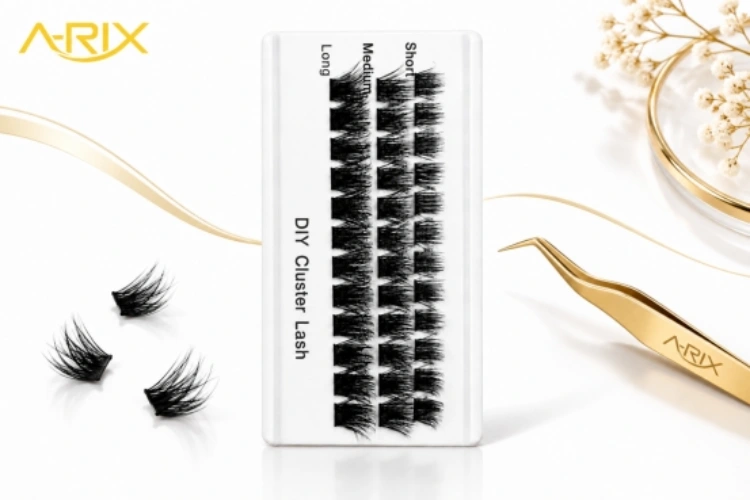
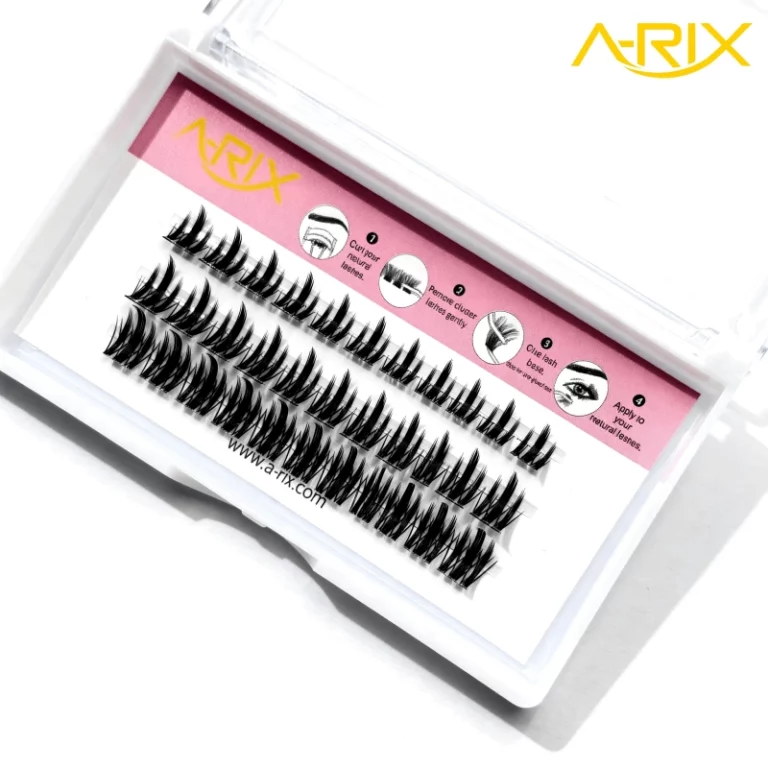
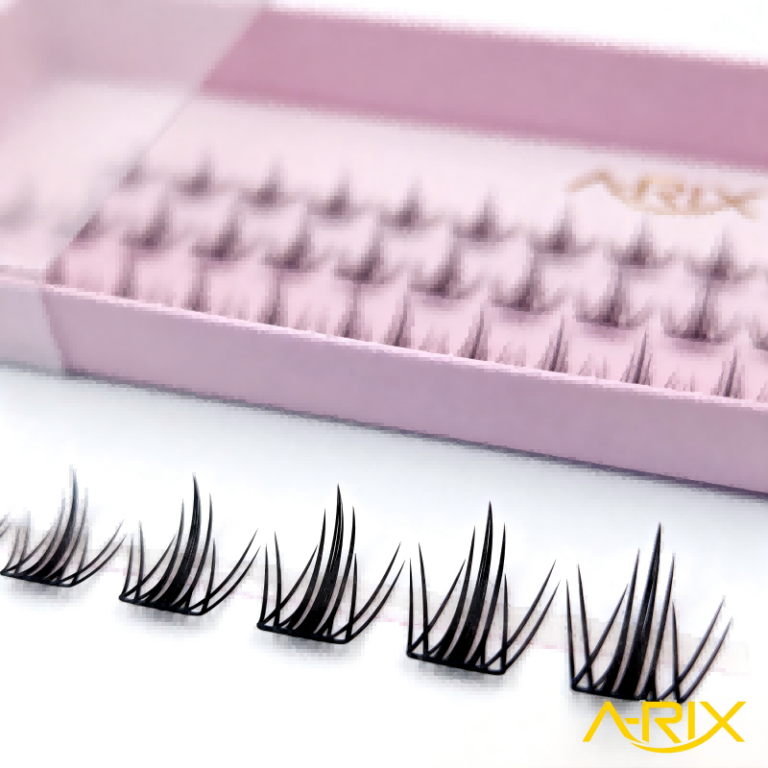
- cluster and half-lash options
- mixed-length patterns for a believable finish
- warm and cool brown tone choices
- packaging that communicates softness and daily wear
That approach turns a color trend into a complete category proposition.
Brown lashes are not replacing black—they are expanding the lash wardrobe
It would be a mistake to frame this as brown versus black.
Black lashes will always have a place in dramatic glam, editorial makeup, nightlife looks, and bold bridal or event styling. But beauty consumers increasingly want options, and brown fills an obvious whitespace.
Think of it this way: black lashes are still the classic statement heel, while brown lashes are the luxury everyday flat. One does not eliminate the other. It broadens the wardrobe.
That is also why brown lashes are likely to outperform as an “entry softness” product.
Many consumers who are not ready for a dramatic strip lash may still try a brown cluster or soft brown half lash. Once they have success with that product, they are more likely to stay in the category and trade across styles. For brands, that makes brown lashes a strong acquisition tool, not just a trend item.
Partner with a Professional Brown Lash Manufacturer
As brown lashes become an increasingly important category within the soft glam trend, brands and distributors need manufacturing partners who can translate market demand into commercially viable products. Beyond color variation, successful brown lash development requires careful control over fiber tone, lash mapping, curl consistency, band construction, and overall wearability to ensure the final product aligns with current consumer preferences.
As an experienced false eyelash manufacturer.
We provide OEM and ODM solutions for brands, wholesalers, retailers, and private label buyers seeking to expand into natural-looking lash collections. Base on over 20 years eyelash production experience, we have stable and reliable raw material (eyelash fiber) supply chain. We can cooperate to innovate new market trend brown color fiber. It can be efficient and creative.
From sampling and product development to packaging execution and bulk production.
We focus on consistency, communication efficiency, and quality control throughout the process. For partners looking to respond to the growing demand for softer, more wearable lash styles, brown lashes represent a strong product opportunity—and a category with clear long-term potential in both established and emerging beauty markets.
Final thoughts
Brown lashes are emerging at exactly the right time. The false-eyelash market is growing. Individual and customizable lash formats are gaining momentum. Beauty media is emphasizing softer, more diffused glamour. Consumers are actively searching for brown mascaras, natural enhancement, and at-home lash solutions. All of those signals point in one direction: softer lash definition is no longer a niche preference. It is becoming mainstream.
That is why brown lashes matter. They capture the mood of modern beauty: polished, wearable, flattering, and intentional. Not flat. Not boring. Just softer in a way that feels current.
For brands, retailers, and lash manufacturers, the takeaway is clear. Brown lashes is a good way to get new users, to stand out in the market, to become a new hit product.
Related links
- Allure: The 13 Best Brown Mascaras of 2025 for a Subtle Fanned-Out Effect
- Allure: How to Do Soft Glam Makeup
- Allure: The Biggest Makeup Trends of 2026 Signal a Colorful Vibe Shift
- Allure: 10 Best False Lashes of 2025, According to Makeup Artists
- Vogue: Brown Mascara Has Gone Viral to Subtly Awaken The Eyes
- Glamour: The Brown Mascara Hype Is Real
- Grand View Research: False Eyelashes Market Size, Share | Industry Report, 2030
- Grand View Research: S. False Eyelashes Market Size & Outlook, 2030