The EU’s new Packaging and Packaging Waste Regulation, commonly known as PPWR, is beginning to change that equation.
Regulation (EU) 2025/40 entered into force on February 11, 2025 and generally became applicable on August 12, 2026, replacing the previous Packaging and Packaging Waste Directive. However, this does not mean every new requirement became mandatory on August 12, 2026. Many of the most important design, recyclability, labeling and recycled-content requirements are being introduced progressively through 2028, 2030 and beyond.
For false eyelash brands selling into Europe, this creates an important product-development question:
Is your packaging being designed only for today’s market—or also for the regulatory environment of 2028 and 2030?
Why PPWR Matters to False Eyelash Brands
PPWR is designed to reduce packaging waste, improve recyclability, increase the use of recycled materials and reduce unnecessary packaging throughout the EU.
Among its broader objectives are making packaging recyclable, limiting excessive packaging and increasing recycled content in plastic packaging.
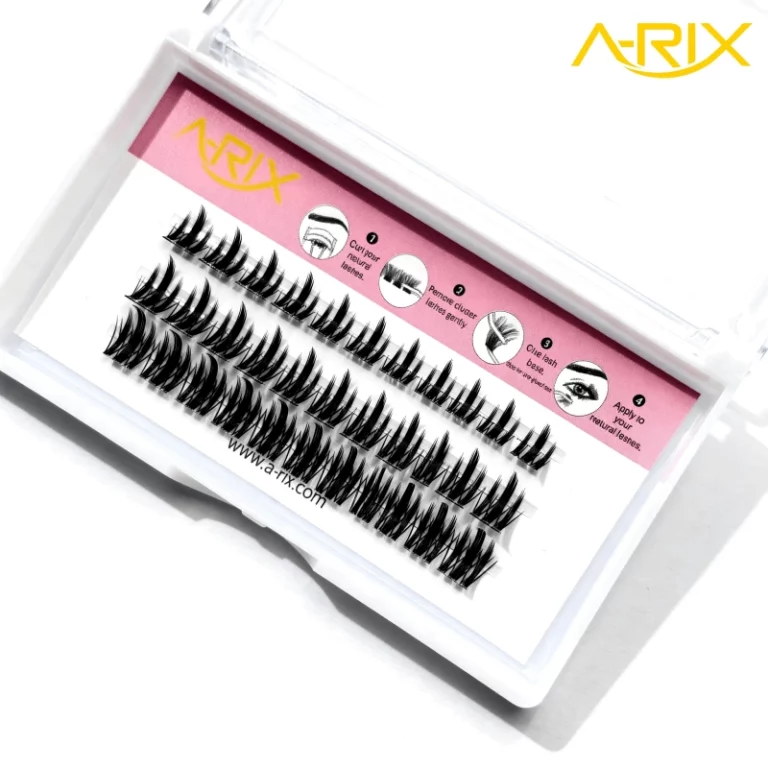
The product itself may weigh only a few grams, yet the retail package may contain:
- A printed paperboard outer box
- A molded PET or plastic tray
- A paper or plastic lash card
- A transparent plastic window
- Lamination or specialty coating
- Magnets
- Foam or EVA inserts
- Decorative foil or metallic elements
- An additional shipping carton or e-commerce mailer
None of these components is automatically prohibited by PPWR.
However, future packaging will increasingly need to justify why each component exists, how much material is used and whether the overall structure can effectively enter recycling streams.
That makes packaging architecture—not simply packaging appearance—a more important part of lash product development.
1. Oversized Lash Packaging Will Become Harder to Justify
One of the clearest PPWR principles is packaging minimisation.
Under Article 10, by 2030 manufacturers or importers must ensure that packaging weight and volume are reduced to the minimum necessary to perform their functions. Packaging designed merely to increase the perceived size of a product, including unnecessary layers, false bottoms or similar structures, is specifically addressed by the Regulation.
False eyelash brands should pay particular attention to another earlier deadline.
By February 12, 2028, economic operators filling sales packaging must reduce empty space to the minimum necessary to maintain packaging functionality and product protection.
This could become especially relevant to lash packaging where a very small pair of lashes is presented inside a disproportionately large box.
That does not mean packaging must become unattractive or extremely compact.
It means brands will increasingly need a stronger functional rationale for the space they use.
The key shift is from “bigger looks more premium” toward “every part of the package has a purpose.”
2. Multi-Material Packaging Deserves More Attention
One of the biggest considerations for lash packaging will be recyclability.
PPWR states that packaging placed on the market must be recyclable, with detailed design-for-recycling requirements progressively taking effect. From 2030, packaging recyclability will be assessed through performance grades, and packaging below the required threshold will be considered technically non-recyclable. By 2038, the rules become stricter again.
This could have significant implications for highly decorative lash packaging.
Imagine a premium lash box consisting of:
Paperboard + glued PET window + plastic tray + magnets + metallic laminate + foam insert.
The issue is not simply whether paper and PET can each theoretically be recycled.
PPWR’s recyclability framework considers the entire packaging unit and its components. Integrated components must be assessed together, while separate components may require separate assessment. Components must also be compatible with established collection, sorting and recycling processes.
For packaging developers, that creates a strong incentive to consider:
Can consumers easily separate the components?
Can sorting facilities identify them correctly?
Does one component interfere with the recycling of another?
As detailed design-for-recycling criteria continue to be developed, brands should avoid assuming that a package is compliant simply because it contains materials described individually as “recyclable.”
3. The PET Lash Tray May Need to Evolve
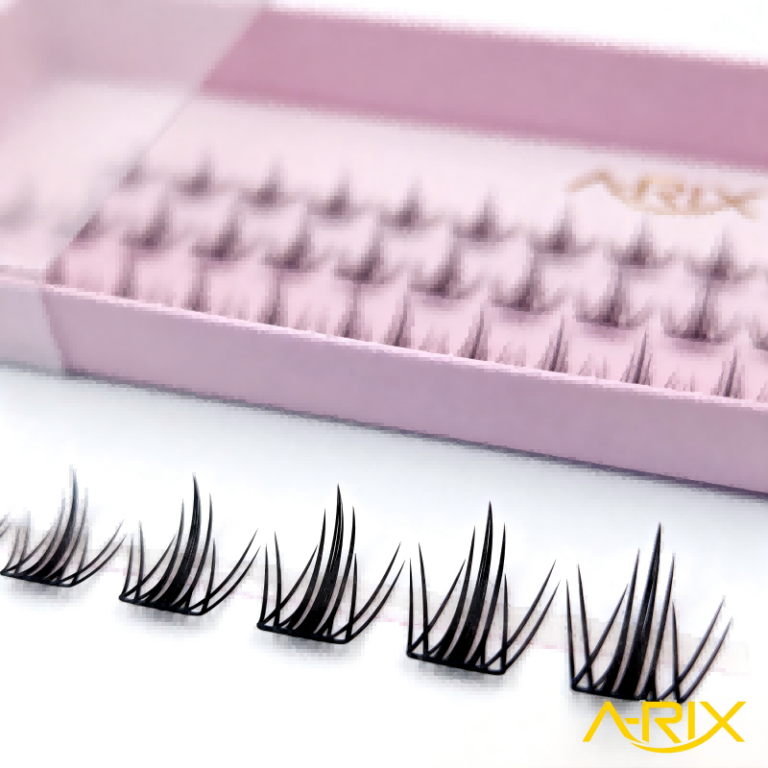
Transparent PET trays are extremely common in the lash industry.
They provide several advantages:
- High product visibility
- Good protection
- Stable lash positioning
- Low manufacturing cost
- Compatibility with automated thermoforming
PET trays are therefore unlikely to disappear simply because PPWR exists.
However, plastic packaging will face increasing pressure regarding both recyclability and recycled content.
PPWR establishes minimum recycled-content requirements for plastic packaging beginning from 2030 or the applicable later date linked to implementing measures. For plastic packaging falling into the general “other plastic packaging” category, the Regulation sets a 35% post-consumer recycled-content target, while different percentages apply to certain contact-sensitive and other categories.
The exact requirement for a particular lash packaging configuration depends on how that packaging is legally classified, so brands should not automatically assume that every PET lash tray falls under the same percentage.
Still, the direction is clear.
When developing new lash trays, brands and suppliers should begin asking questions such as:
Can the tray be made with recycled PET?
Can material thickness be reduced without affecting protection?
Could the structure use a single plastic type rather than multiple polymers?
Can the tray be separated easily from the paper box?
Can unnecessary plastic walls or decorative structures be removed?
These questions will become increasingly important when packaging specifications are created for products intended to remain on the market for several years.
4. A Plastic Window Is Small—but It Still Matters
Transparent windows are popular because lash customers want to see the style before purchasing.
Therefore, eliminating every transparent window is not necessarily the best product-development solution.
Instead, brands can examine the structure.
A large plastic window permanently bonded to a laminated paperboard box creates a different recycling challenge from a smaller, easily separable component.
Another possibility is structural packaging design.
For example, instead of adding a separate plastic window, a package could use:
- A smaller viewing opening
- A removable transparent sleeve
- A tray that itself provides product visibility
- Strategic die-cut areas
- Reduced window dimensions
The objective should be to maintain the customer’s ability to evaluate lash quality while reducing unnecessary material complexity.
5. Magnetic Lash Boxes Need a More Careful Strategy
Magnetic rigid boxes are popular in premium lash packaging because they create a satisfying closing experience and a strong perception of quality.
They are not automatically prohibited under PPWR.
However, magnets, rigid board, coatings, internal trays and adhesives create a more complex packaging structure.
Under PPWR’s design-for-recycling approach, the compatibility and separability of packaging components will matter increasingly as detailed criteria are implemented.
This does not necessarily mean premium brands need to abandon magnetic packaging immediately.
Instead, brands should consider whether a heavy magnetic box is appropriate for every SKU.
One strategy could be:
Hero Collection → premium rigid packaging
Core Collection → lightweight recyclable paperboard packaging
Refill / Infill Packs → minimal packaging
This creates a packaging hierarchy rather than using the same heavy structure for every purchase.
There is also an important distinction around the word “reusable.”
A premium lash box that consumers can keep at home is not automatically considered reusable packaging under PPWR. The Regulation defines reusable packaging through multiple conditions, including intentional design for multiple uses and participation in an appropriate re-use system.
Brands should therefore be careful about casually using regulatory sustainability terminology simply because a package feels durable.
6. E-Commerce Lash Brands Should Review Shipping Boxes Too
PPWR does not stop at the retail lash box.
For DTC brands selling through Shopify, TikTok Shop, Amazon or other online channels, the shipping package is also relevant.
For grouped, transport and e-commerce packaging, PPWR introduces a maximum 50% empty-space ratio from 2030 or the applicable later date specified by the Regulation. Importantly, filling materials such as bubble wrap, foam, paper cuttings and air cushions are counted as empty space for this calculation.
This matters because a common e-commerce scenario looks like this:
Small lash box
→ bubble wrap
→ significantly larger shipping carton.
Brands should begin optimising carton dimensions around actual order combinations.
Instead of relying on one oversized universal shipping carton, brands may benefit from developing several optimised shipping formats.
This can reduce packaging material while also potentially reducing dimensional shipping costs.
7. New EU Packaging Labels Are Coming
Another major PPWR change concerns harmonised packaging labels.
From August 12, 2028, or 24 months after the relevant implementing measures enter into force, whichever is later, packaging placed on the market will need harmonised labeling showing material composition to help consumers sort packaging correctly.
The system is intended to use harmonised pictograms.
Businesses may also use QR codes or other standardised digital carriers to provide additional information about how separate packaging components should be disposed of.
For lash packaging designers, this means artwork space should start being considered now.
Future packaging may need room for:
- Material identification
- Sorting information
- Manufacturer information
- Importer information where applicable
- Digital data carriers or QR codes
- Existing product information
Waiting until the final artwork stage to consider regulatory information could lead to crowded or unattractive layouts.
A more future-proof approach is to integrate a dedicated regulatory information area into the packaging template from the beginning.
8. PPWR Is Also a Documentation Issue
One of the less visible changes is that PPWR compliance is not only about what the packaging looks like.
Manufacturers have conformity and documentation responsibilities linked to the applicable PPWR requirements, including technical documentation and an EU declaration of conformity. Suppliers, in turn, are required to provide manufacturers with the information and documentation necessary to demonstrate packaging compliance.
This is particularly relevant for private-label lash brands.
Under PPWR’s definitions, where a company has packaging or a packaged product designed or manufactured under its own name or trademark, that company may be considered the manufacturer, subject to specific exceptions including certain micro-enterprise situations.
This means lash brands should increasingly expect packaging suppliers and OEM manufacturers to provide more than:
“This box is recyclable.”
Future procurement conversations may require information such as:
- Material composition
- Material weights
- Plastic type
- Recycled-content information
- Component structure
- Supplier documentation
- Traceability information
- Evidence supporting environmental claims
A packaging supplier that understands these requirements can therefore become much more valuable than one that simply produces according to artwork.
What Should Lash Brands Do Now?
August 2026 should be treated as the beginning of a transition period rather than a reason for panic.
A practical first step is to audit existing packaging.
For every SKU, record:
Outer box material → inner tray material → window → coating → adhesive → magnet → insert → shipping package.
Then identify which components contribute to product protection and which primarily contribute to decoration or perceived volume.
The next step is not necessarily to redesign every package immediately.
Instead, brands can prioritise new product development.
When launching a new DIY cluster kit, strip lash collection, refill pack or pre-glued lash range, consider building the packaging around PPWR principles from the start.
That could mean:
Less material.
Fewer material combinations.
Better component separation.
Smaller empty spaces.
More recycled material.
Clearer material documentation.
More efficient e-commerce packaging.
Sustainability Does Not Mean Packaging Has to Look Cheap
Perhaps the biggest misconception is that sustainable packaging must look basic.
Premiumisation can come from many elements besides material quantity:
- Better structural design
- High-quality typography
- Strong brand colour systems
- Creative die-cutting
- Surface texture
- Intelligent opening mechanisms
- Product presentation
- Consistent visual identity
For Gen Z and digitally native beauty brands, packaging can become smarter rather than heavier.
A beautifully designed lightweight box with a carefully presented lash tray may communicate more modern luxury than a large multi-layer package filled with unnecessary material.
Final Thoughts
PPWR will not transform false eyelash packaging overnight.
But it is changing the direction of travel.
The question for lash brands is no longer only:
“Does this packaging look premium?”
It is increasingly:
“Can this packaging protect the product, present the lashes beautifully, use materials efficiently and remain suitable for the future European market?”
Brands that begin redesigning packaging before the major 2028 and 2030 milestones will have more time to test materials, optimise structures and maintain their visual identity.
For lash manufacturers and packaging suppliers, this also creates a new role.
The strongest suppliers will not simply manufacture whatever structure the customer sends.
They will help brands rethink the package itself—from PET tray thickness and paper structures to refill packs, shipping cartons and material documentation.
In the PPWR era, good lash packaging is no longer just about presentation. It is becoming part of product strategy.