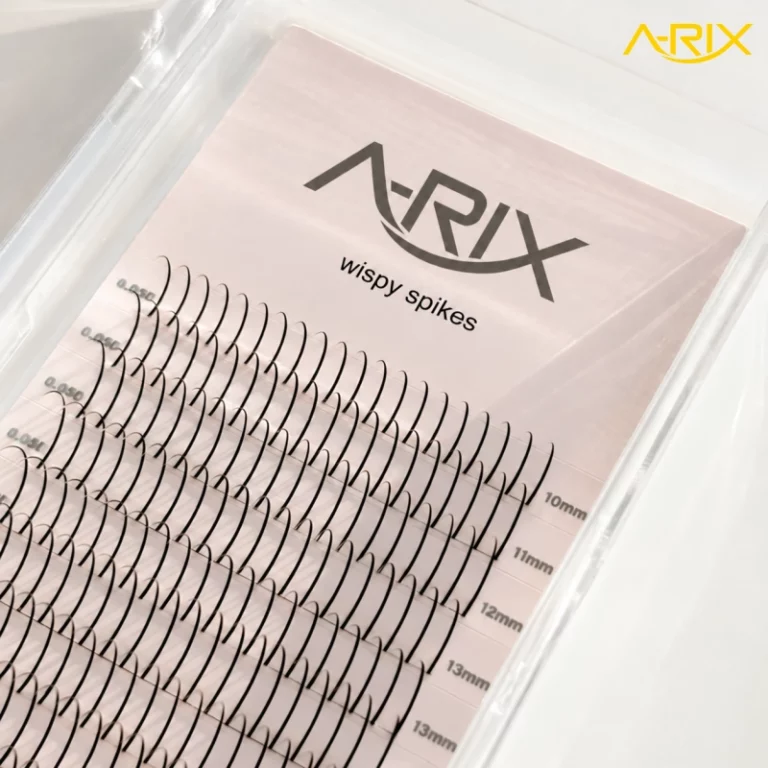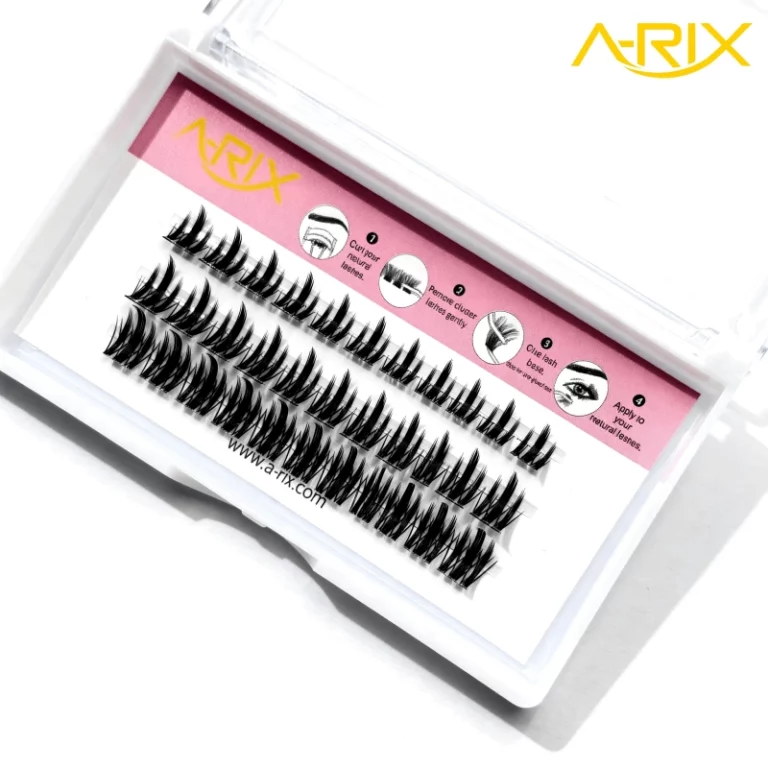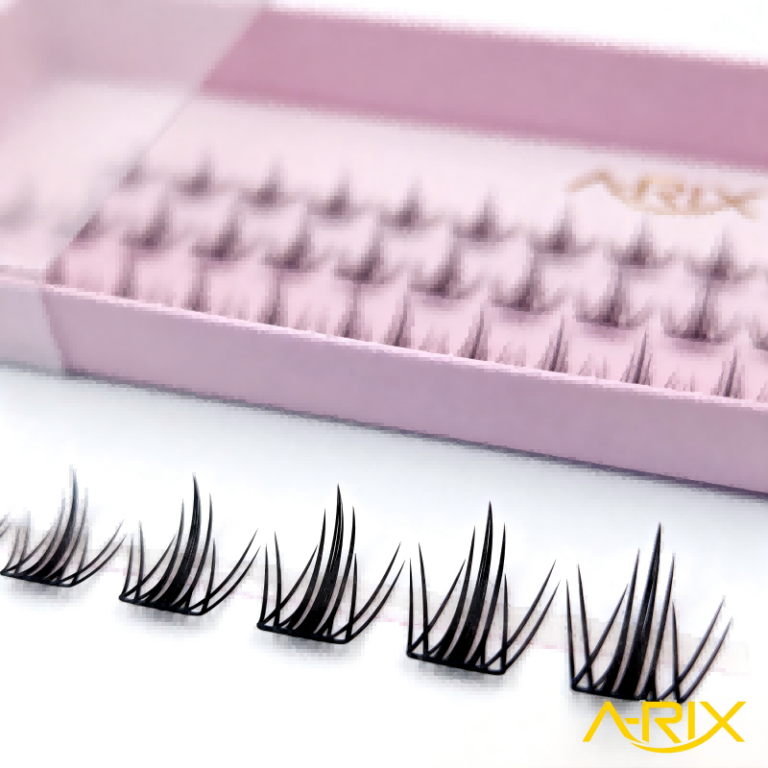
Easy fanning lashes can reduce the time technicians spend creating volume fans, but tray configuration still affects workflow and stock cost. A single-length tray gives a full supply of one length. A mixed-length tray places several lengths in one package. Neither format is automatically more economical: the right choice depends on map usage, appointment volume, technician habits, and the accuracy of the salon’s reorder data.
New salons and training teams often benefit from mixed trays because they can test several lengths without opening many SKUs. Established salons may prefer single-length trays for the lengths they use every day. Many buyers end up with a hybrid inventory: mixed trays for sampling and low-volume lengths, plus single-length trays for the core of frequently booked maps.
A-RIX supplies professional eyelash extensions and supports OEM/ODM and private-label projects. Its self-fanning easy fan tray offers a concrete product for comparing strip behavior, fiber specifications, tray labels, packaging, and customization. A practical purchasing plan should begin with technician workflow and finish with documented sample and receiving controls.

How Tray Configuration Changes Daily Work
The number of lengths in a tray determines how technicians reach for stock, how quickly individual rows are consumed, and how purchasing staff interpret what is left at reorder time.
Single-Length Trays for Repeated Maps
A single-length tray is straightforward when the salon uses that length across many appointments. Technicians do not need to search among rows, and purchasing staff can count remaining strips more easily. The risk is overbuying lengths that appear essential in a map but are used only in small quantities. Base the initial order on actual service records rather than a theoretical full range.
Mixed-Length Trays for Variety
Mixed trays are useful when the salon needs several lengths in smaller quantities. They can support sample trials, new map development, training, travel kits, and services with uncertain demand. However, popular rows may run out while less-used lengths remain. The apparent savings of one tray can disappear if technicians open another tray just to replace a single depleted row.
Hybrid Stock for Better Control
A hybrid model uses mixed trays to cover the edges of the length range and single-length trays for the center of high-volume maps. Review which rows are repeatedly depleted first. This approach allows the salon to maintain variety without buying a full carton of every length, and it creates a clear path from testing to deeper inventory.
Match Tray Choice to Lash Maps
Tray decisions are easier when the salon has a map library. Each map should show the length sequence, curl, thickness, and approximate usage so purchasing can translate services into stock requirements.
Natural and Open-Eye Maps
Natural maps may use a gradual progression with moderate differences between zones. A mixed tray can cover occasional variations, while single trays may be needed for the central lengths used across many clients. Record adjustments made for eye shape and natural lash condition. Those notes reveal whether the team truly needs more sizes or simply needs a clearer map standard.
Cat-Eye and Textured Maps
Cat-eye and textured designs may draw heavily on particular outer lengths or combine uneven peaks. If the same outer length is repeatedly exhausted, move it to a single-length SKU. Easy fan behavior should also remain stable across the selected range. Do not assume that every length releases and fans identically without testing the actual tray.
Training and New-Service Maps
Mixed trays are practical for training because technicians can compare lengths without opening a wide inventory. Pair the tray with a controlled exercise and record pickup, fan spread, base neatness, and direction. The cluster versus individual lash comparison is also useful when training staff to use precise category language and avoid confusing professional extensions with retail cluster products.
Test Easy Fan Performance Before Buying
“Easy fan” is a functional product description, not a guarantee that every technician will obtain the same result. Testing should use the salon’s normal tools and a repeatable method.
Strip and Tape Behavior
Check how the fibers release from the strip and whether the fan base stays controlled. Tape stickiness can influence pickup, but the preferred balance depends on technique and tools. A-RIX supports customization discussions that may include tape stickiness, width, or color, subject to the project. Record the exact tray and tape condition used for approval.
Fan Spread and Base Neatness
Create multiple fans from different strip positions and compare spread, fiber separation, base shape, curl, and tip alignment. The A-RIX Self-Fanning Easy Fan Volume Lash Extensions Tray gives buyers a specific sample reference. Photograph acceptable and unacceptable fans so purchasing and production teams can discuss the same visual standard.

Consistency Across Rows and Trays
Test more than one row and more than one tray when possible. Compare color, sheen, curl, labeled length, pickup, and visible fiber condition. The A-RIX PBT quality-control article provides a broader framework for raw material, shaping, finished product, and packaging checks. Keep an approved tray for future receiving inspections.
Calculate Inventory and Reorder Needs
Tray economics depend on usable fibers and consumption patterns, not only the purchase price. A simple monthly stock review can reveal whether the current format supports or obstructs the salon’s workflow.
Track Row-Level Consumption
Ask technicians to mark when a row is finished or when they substitute another length because stock is unavailable. Aggregate the notes by length, curl, thickness, and service. Even a basic count over several weeks is more useful than ordering equal quantities across the entire range. Separate training use from paid-service use so the forecast reflects normal demand.
Include Waste and Stockouts
Record fibers lost to damaged tips, inconsistent pickup, contamination, poor labeling, or an unsuitable tape condition. Also record appointments affected by stockouts. A low-priced tray is not economical if usable yield is poor or if technicians repeatedly open new mixed trays to reach one length. Compare total usable supply and service disruption, not just invoice cost.
Set Reorder Points by Lead Time
Reorder points should cover expected consumption during confirmed production and transport time, plus a reasonable buffer for variability. Do not assume the same timing for stock products and customized packaging. The A-RIX catalog can support product selection, but current minimum quantities, sampling time, production schedule, and shipping arrangement must be confirmed for each order.
Build a Private-Label Easy Fan Range
A private-label range needs a specification that technicians can recognize and purchasing teams can repeat. Product and packaging decisions should be approved together.
Select the Core Product Specification
Define fiber appearance and feel, color, shine, curl, thickness, length range, fan behavior, strip layout, tape condition, and tray code. Use the confirmed easy fanning lash product as the exact starting point. If the sample needs adjustment, describe the requested difference against the retained tray instead of using broad words such as softer or easier.
Design Clear Tray Labels and Packaging
Labels should make length, curl, thickness, and product family easy to read during a busy appointment. Review the outer box, barcode space, language, instructions, carton marks, and brand artwork. A-RIX packaging support may cover paper or rigid cards, plastic components, inner trays, outer boxes, and printed instructions, depending on the project and confirmed commercial terms.
Approve Samples and Control Reorders
Keep the signed specification, approved physical tray, artwork proof, photos, and order code in one record. At receiving, open units from several cartons and compare them with the retained sample. The A-RIX service page provides a route for sampling and private-label discussions, while any requested change should receive a new approval before bulk production.
After launch, hold a short stock review with technicians and the purchasing lead. Compare planned maps with actual row consumption, note which tape or pickup observations recur, and separate product issues from training issues. This evidence makes the next order more accurate and shows whether the salon should deepen single-length stock or retain a flexible mixed-tray approach.
Conclusion
Single-length trays work best where demand is repeated and predictable. Mixed-length trays provide flexibility for testing, training, and lower-volume lengths. Most growing salons benefit from combining the two: mixed trays at the edges of the range and single trays for the lengths that disappear first. Buyers evaluating A-RIX should test the exact easy fan tray, document fan and tape behavior, and use the contact page to confirm customization, packaging, quantities, and timing for the intended order.
FAQs
What are easy fanning lashes?
Easy fanning lashes are extension fibers arranged on a strip to support fan creation with a suitable pickup method. Exact construction and tape behavior vary, so technicians should test the specific product.
Are mixed-length trays better for beginners?
They can be useful for training and experimenting with maps because several lengths are available in one tray. Beginners still need professional instruction and a controlled method for safe, consistent work.
When should a salon buy single-length trays?
Single-length trays make sense when usage records show that a particular length is repeatedly consumed across appointments or runs out early in mixed trays.
What should buyers test on an easy fan sample?
Test strip release, tape behavior, fan spread, base neatness, curl, color, tip alignment, labeled lengths, consistency across rows, and compatibility with the salon’s normal tools and method.
Can A-RIX customize easy fanning lash trays?
A-RIX supports OEM/ODM and customization discussions for extension products and packaging. The available specification changes, minimum quantities, samples, pricing, and timing should be confirmed for the exact project.