Eyelash extensions rarely look messy overnight. The change is usually gradual. A little skin oil settles near the roots, eyeliner stays between the fibers, or several lashes twist after sleep. Then the set starts looking uneven, even though the appointment was only a few days ago.
While avoiding eye washes altogether is not the answer and not cleaning often enough can even make the lash line look worse, there are a small amount of aftercare products for eyelash extensions that can be used without rubbing or pulling and that do not leave a residue.

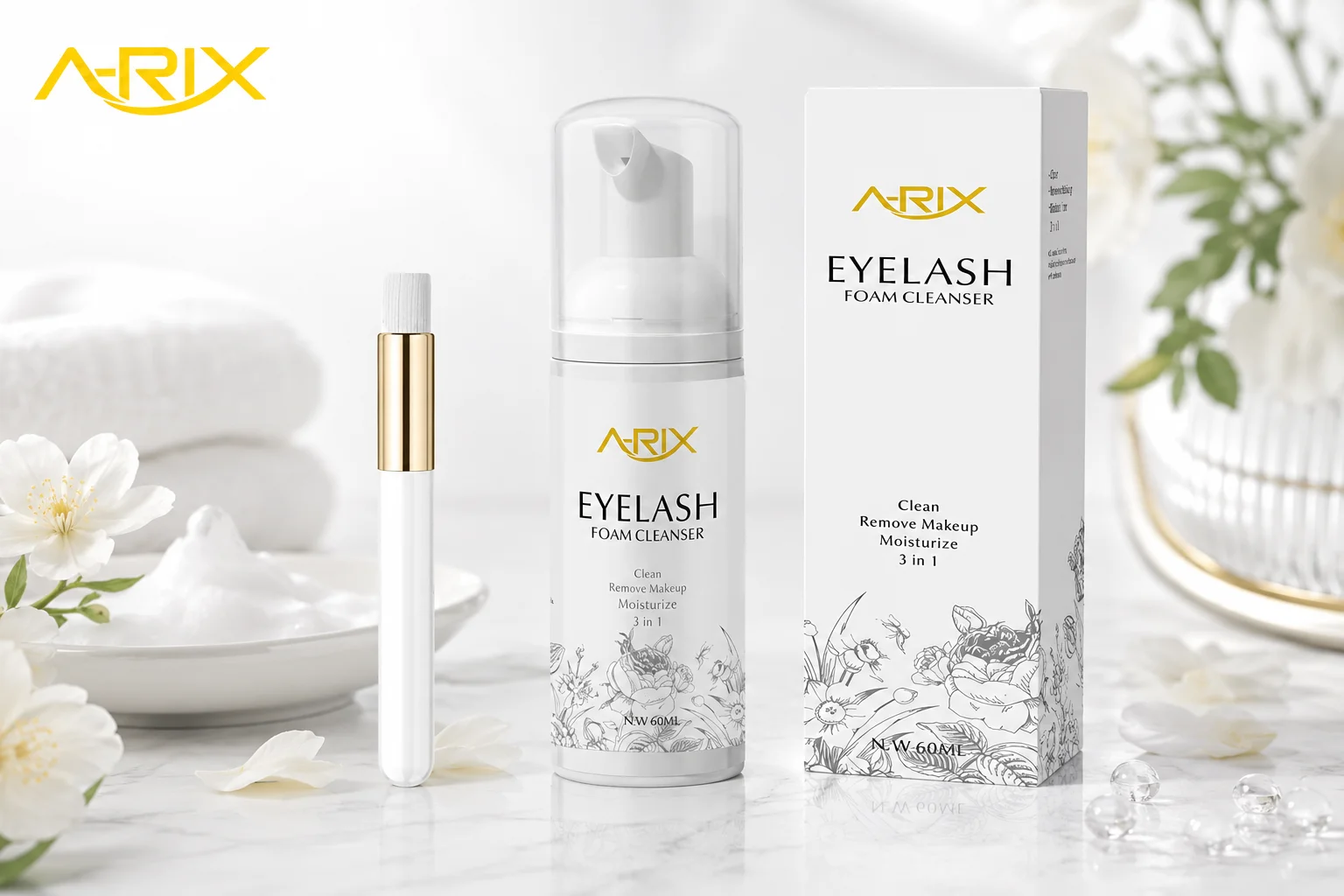
A-RIX has worked in eyelash manufacturing for more than 20 years, with over 15 years of OEM/ODM experience for beauty businesses. Its work covers lash extensions, DIY cluster lashes, strip lashes, tools, packaging, product development, and quality checks. For aftercare, the 50ml Professional-Grade Lash Extension & Eyelid Foam Cleanser/Eyelash Shampoo Gentle Foaming Wash for Salon is a practical product to build around. It comes in a foam format, is listed as oil-free, and can be used with a soft cleaning brush. Salons can use it during service or include it in a retail aftercare kit.
Why Do Eyelash Extensions Become Dirty or Fall Out Too Soon?
Before buying more products, look at what is actually happening near the lash line. Most aftercare problems come from a few ordinary habits. They are easy to miss because none of them seems serious on its own.
Oil and Makeup Stay Close to the Roots
Eye makeup does not necessarily come off with one wash of make-up remover. Fine eyeliner, powder eye shadow, facial oil, eye cream and other products can seep between the individual fibers of the lash extensions, particularly when the lash line is very dense.
After a few days the roots may become darker or sticky. The fibers can start to clump together in several places. While water alone can loosen surface dirt to scrub with the pad of your finger around the eyelid edge, it is not enough to clean everything off.
Wet Lashes Get Rubbed or Brushed Too Early
Wet hair extensions have a tendency to twist. When you brush your extensions straight after washing, you can pull the fibers in odd directions. Gently wiping your extensions with a towel can also get the hair tips caught.
It is better to remove extra water from the skin around your eyes, let the lashes dry, then use a clean spoolie. That small change often makes the set look neater.
Heavy Products Reach the Bonding Area
Rich eye creams, facial oils, and some makeup removers can move into the lash roots during the day or while you sleep. You may apply them below the eye, but the product can still spread.
Keep thick skincare away from the bonding area. You do not need to stop using eye care altogether. Just apply less and place it with more control.
Which 5 Eyelash Extension Aftercare Products Should You Keep?
You do not need ten bottles and a long routine. Five basic items are enough for most users. Each one has a clear job, so there is less chance of buying tools that sit unused.
1. Lash Extension Foam Cleanser
A foam cleanser is the main product in the set. Foam can move between lash fibers without the heavy rubbing that a thick facial cleanser may need.
The oil-free thick-foam lash cleanser is designed for dirt, oil, and cosmetic residue around natural and extension lashes. The product instructions recommend shaking the bottle, dispensing the foam, then using a brush to clean the lash area. Keep the foam out of the eyes and rinse it away fully.
For salons, a 50ml bottle is also easy to add to a take-home care pack. It gives the client one clear product to use instead of asking them to guess which face wash may be suitable.
2. Soft Lash Cleansing Brush
A soft brush helps the foam reach the eyelid edge and the spaces between the fibers. The bristles of your brush should easily bend when you press them against your hand. If they are stiff and do not easily bend then your brush is likely to be too harsh for the lash line.
Use small movements. Do not scrub from side to side as if you are removing waterproof makeup from bare skin. The point is to loosen residue, not to test the strength of the extensions.
Wash the brush after use and leave it somewhere clean to dry. A damp brush stored in a closed makeup bag quickly becomes less useful.
3. Clean Disposable Spoolies
A spoolie is useful for separating lashes after they are dry. It also helps in the morning when a few extensions have crossed during sleep.
Brush from the middle toward the tips. There is little benefit in pushing the brush hard into the roots. If the set is dense, work slowly rather than trying to fix the whole eye in one pass.
Replace the spoolie when the bristles become sticky, bent, or covered in makeup. One person should use one brush. Sharing the same spoolie is not a good salon habit.
4. Cool-Air Lash Fan
A small fan makes drying easier after cleansing. It removes moisture without the drag caused by towels or tissues.
Hold it far enough away that the air feels gentle. Strong airflow can push lashes in different directions, especially when they are still wet. Heat is not needed.
This product is most useful for people who wear makeup often, exercise regularly, or live in a humid area. It is simple, but it solves a real aftercare problem.
5. Extension-Compatible Eye Makeup Remover
Note: This product is not eye makeup remover. It is lash shampoo. While eye makeup remover will dissolve and loosen off eye makeup such as eyeliner and eye shadow, the real cleaning of the lash line and surrounding skin is then done with the lash shampoo foam cleanser.
Read the product directions before using it on extensions. Formulas vary, so a remover that works well for one person may not suit another adhesive system.
Press and loosen the makeup first. Do not rub a cotton pad back and forth across the lashes. Professional adhesive remover should also stay in the salon. It is not a daily home-care product.
How Should You Use Lash Foam Cleanser?
A good product can still give poor results when the steps are rushed. Cleaning should feel slow and light. You are dealing with a small area, not washing a makeup brush.
Prepare the Eye Area First
Wash your hands before touching the lashes. Remove contact lenses, and loosen heavy eye makeup without pulling at the extension fibers.
Check how the skin feels. Mild everyday buildup is one thing. Swelling, pain, or strong irritation is different and should not be covered up with more cleanser.
Clean the Lash Line with Light Pressure
Close your eye and apply a small amount of foam, then use the soft brush to work through the lashes at the lash line in short strokes.
Pay special attention to the root area of your lashes, where oils from makeup reside. Also, be careful not to pull lashes outward while cleaning them. Repeating a light stroke rather than trying to press harder will usually remove any stubborn residue.
Rinse, Dry, and Brush in That Order
Rinse until there is no foam left between the fibers. Dried cleanser can leave a pale film and make the lashes look dusty.
Pat the surrounding skin, then let the lashes air-dry or use cool air. Once they are dry, use the spoolie to place them back into shape. Cleaning first and brushing last is a small detail, but it matters.
What Does a Practical Daily Aftercare Routine Look Like?
Don’t assume your routine has to look exactly the same every day. Depending on whether or not you are wearing make-up, the weather, whether you have been for exercise and how oily your skin is then you will need more or less cleaning on different days.
Keep Morning Care Simple
In the morning, check for crossed or flattened lashes. A clean spoolie is often enough.
Apply skincare around the eye carefully. Leave a little space near the roots rather than covering the whole area with cream.
Clean More Carefully After Makeup or Exercise
Same comment as before: Cleaning your eyeliner, heavy eye shadow, and general facial grease off at the end of the night is important. Failing to do so because you are afraid you will pull some of your lashes off can cause even more problems in the long run.
Use remover when needed, then foam cleanser, rinse, dry, and brush. The routine is not complicated, but each step has a different purpose.
Adjust the Routine When Conditions Change
Hot weather may make the lash line oilier. Travel can also change your routine because sleep, makeup, and humidity are different.
Watch the lashes rather than following a strict number of washes. If the roots look clean and the fibers stay separate, your routine is probably working. If the set remains sticky or twisted, something needs changing.
Which Products and Habits Should You Avoid?
Most people do not damage extensions with one big mistake. It happens through small repeated habits. A rough towel used every day can do more harm than one missed wash.
Rough Towels and Loose Cotton Fibers
Towels can hook the tips of extensions. Loose cotton may leave fibers between the lashes.
Pat the skin instead of wiping it. A soft brush and cool-air fan give you more control around a full set.
Waterproof Mascara and Heavy Eye Products
Waterproof mascara usually needs stronger removal. That means more rubbing, more remover, and more pressure near the roots.
Heavy cream and oil may also travel into the lash line. Use smaller amounts and keep them away from the attachment area.
Home Removal and Pulling Loose Lashes
Do not pull extensions because a few are sitting at an odd angle. You may take out natural lashes with them.
When the set needs full removal, return to a trained technician. Daily aftercare keeps lashes clean. It does not replace professional removal.
Conclusion: Build a Better Aftercare Routine with A-RIX
Cleaner lashes usually come from regular care, not a large collection of beauty tools. Start with the cleanser. Add a soft brush, spoolie, fan, and suitable makeup remover. Use them in the right order.
Make the Cleanser the Main Product
The 50ml Professional-Grade Lash Extension & Eyelid Foam Cleanser/Eyelash Shampoo Gentle Foaming Wash for Salon gives salons and users a straightforward way to clean extension lashes. The foam format is easy to control, the bottle is small enough for home use, and the product can be paired with a brush for more careful cleaning.
It also fits well in salon retail because the purpose is easy to explain. Clients often forget long aftercare instructions. A cleanser with a simple routine is easier for them to keep using.
Build a Complete Aftercare Set
A-RIX can support more than the cleanser itself. Its OEM/ODM and packaging service covers eyelash products, tools, removers, glue, package design, printing, and custom combinations.
That is useful when a salon, distributor, or beauty business wants to sell one complete care set instead of separate items from different suppliers. Product and packaging choices can be planned together.
Ask About Service and Contact
A salon may only need a small retail pack. A distributor may need custom labels, boxes, or a larger product mix. The order plan should match the sales channel.
Review the available service options, then contact the lash team with the target market, packaging idea, quantity, and expected use. Clear information at the start usually leads to a clearer product plan.
FAQ
Q1: What Products Do I Need for Eyelash Extension Aftercare?
A1: A basic kit includes lash foam cleanser, a soft cleansing brush, clean spoolies, a cool-air lash fan, and an eye makeup remover suitable for extensions.
Q2: Can I Wash Eyelash Extensions Every Day?
A2: You can clean them regularly, especially after makeup, exercise, or heavy oil buildup. Use light pressure, rinse well, and dry the lashes before brushing.
Q3: Is Lash Shampoo Necessary for Eyelash Extensions?
A3: Lash shampoo helps clean oil, dust, and makeup around the roots. Plain water may not remove all of that residue.
Q4: Can I Use Micellar Water on Eyelash Extensions?
A4: Some formulas may be suitable, while others may not. Check the directions and ask your technician about the adhesive used for your set.
Q5: How Should I Dry Eyelash Extensions After Washing?
A5: Pat the skin around the eyes, then let the lashes air-dry or use gentle cool air. Brush them only after they are dry.