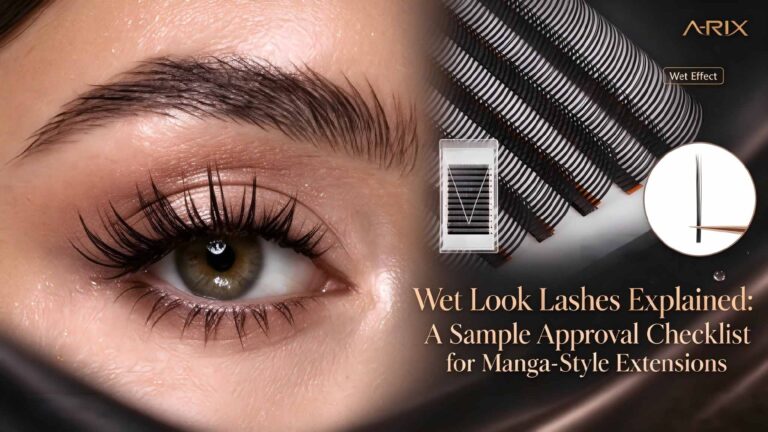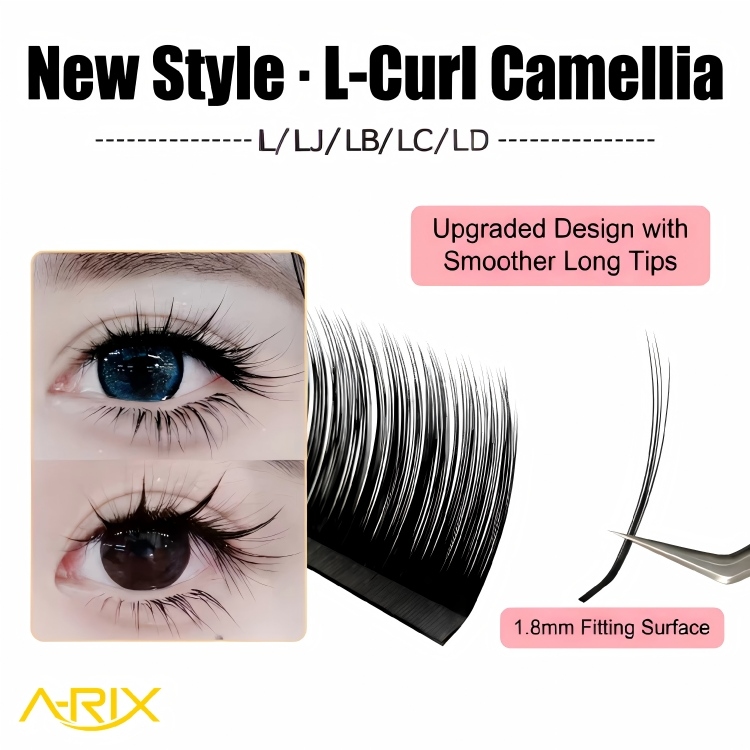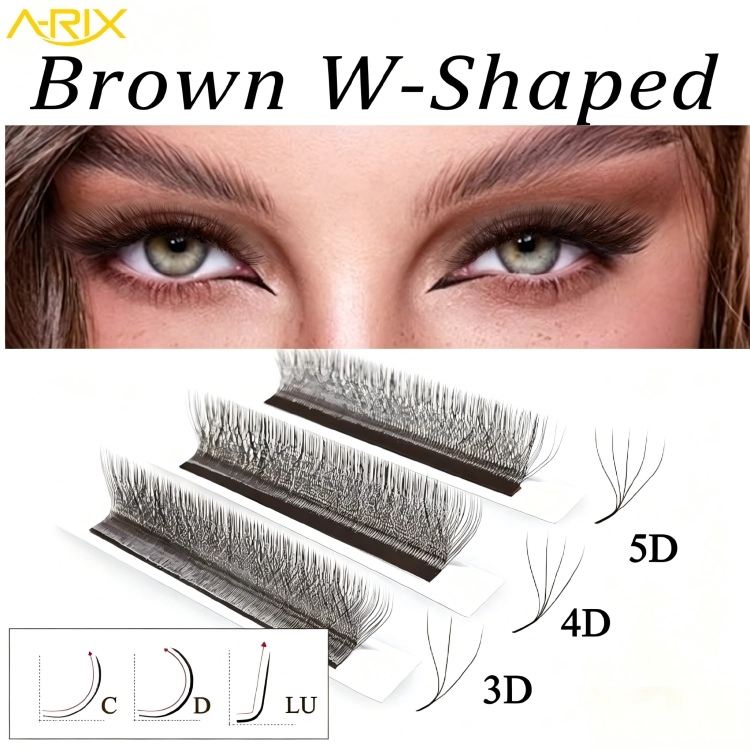

Brown W lash extensions can look warm and airy in a salon, then almost black in a product listing. Imagine choosing the warmer-looking tray for a soft glam launch and opening a carton that appears much darker. Even if the correct product has arrived, somebody now has to explain the photograph to the buyer.
That’s why we’d start the photography brief with a coded physical sample. It gives purchasing and the creative team a shared reference. When the pictures come back, the question becomes whether they represent that brown accurately enough for the intended listing.
For a private label team, this is the less glamorous part of a soft glam launch. It also makes the collection easier to explain to salons. Here are the decisions we’d bring into the brief while the sample, packaging, and imagery are still being developed.
Give Brown W Lash Extensions a Clear Role in the Range
Describe the look in terms the buyer can use
What does the salon mean by brown? It could mean a dark alternative that fits comfortably beside its black trays. It could also mean a warmer result that looks deliberately different in a consultation. Both are reasonable requests. They call for different choices about the launch sample and the picture used to sell it.
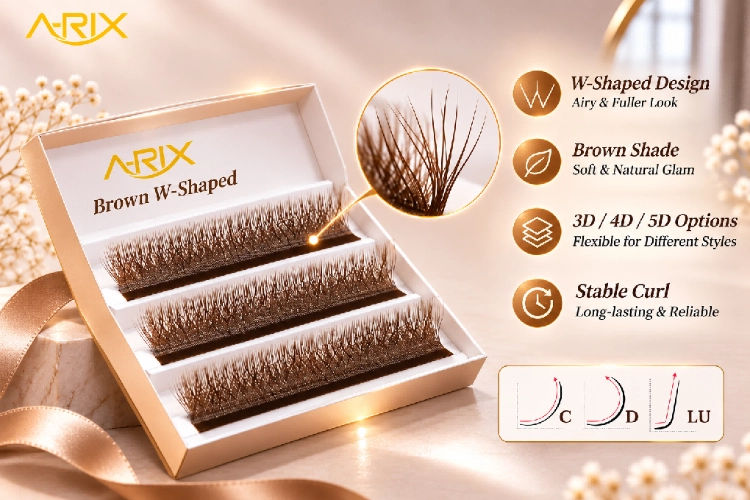
The A-RIX brown W-shaped eyelash collection gives the discussion a professional product to work from, with 3D, 4D, and 5D options in the collection. Choose the version for launch before commissioning the main photograph. The customer needs to know which construction is pictured when they select an order option.
How would you describe the brown with the sample beside you? Use those observations in the copy. An artist will make the client-specific decision later, during a consultation. Your wholesale description can help by explaining the appearance of the product the artist is considering.
Keep the professional format easy to recognize
Keep a close view of the W component available alongside the tray view. Someone familiar with DIY clusters may otherwise read a cropped bundle of fibers as a different format. The detail view explains the construction. The tray view explains what is supplied.
A styled eye photograph belongs with the collection as a possible aesthetic. Make that role clear in its caption. The makeup and the artist’s design are part of what the viewer sees. When a salon asks what is in the wholesale tray, the distributor will still need the product views to answer.
Establish a Physical Shade Reference Before Naming It
Choose one sample that purchasing and creative teams can share
Set aside the sample when the shade is approved. Its label should let a colleague find the supplier code, construction, and approval date without searching an email thread. Photography may need to borrow it. Agree where it goes afterward, because purchasing may need it again long after the launch shoot.
There may be several versions of a picture in circulation after launch. If somebody questions the brown in a sales sheet, pull the approved file and retained tray out together. You’ll have a better basis for the conversation than a folder of images downloaded from different channels.
Another brown raises a purchasing question as well as a design question. Will it replace the existing item or join the range? The answer determines what happens to the old code and what a returning customer should expect. Have that discussion with both samples on the desk.
Separate shade names from the purchasing identifier
You might call a shade espresso on the front of the box. Behind that name, purchasing still needs an identifier that leads to one approved item. Keep the family, curl, length selection, and construction with it. The creative name can stay expressive while the order record does the precise work.
During development, a mood board can help explain what you’re looking for. As sample decisions are made, transfer the agreed details into that record. It should be possible to place the next order from the record without reconstructing the original creative discussion.
Photograph Color and Structure as Separate Questions
Make the lighting repeatable
How will the studio repeat this shoot when the next shade arrives? We’d ask for the lighting and camera setup to be recorded, along with a frame containing a neutral reference. Keep it with the working files. Months later, it may be the simplest way for an editor to understand how the original picture was made.
White trays and skin give brown fibers very different surroundings. Include a contextual view if it helps explain the collection, with a caption identifying its role. The main catalogue view can then stay consistent enough to compare against another shade.
The group view is worth asking for during editing. Two pictures can each look attractive and still sit badly together. With close browns, a warmer edit on one file can become more noticeable than the actual difference between the fibers. Bring the samples back into the discussion if that happens.
Show enough detail to identify the W fan
Enlarge the edited image enough to see the tips and base, then look at the version sized for the product grid. Both views have a job. The close view should retain the W outline, while the small one still needs to read as a brown professional lash product. Ask for another edit if the fibers have merged into a dark block.
Place the item within the professional YY and W lash range consistently. Where a page offers several constructions, say which appears in the photograph. A customer choosing a fan option should be able to connect that choice with the picture without asking the sales team to decode it.
Carry the Same Shade Identity Through Every Sales Channel
Write product information that survives a thumbnail
Try choosing the item on a phone. You’ll see how much of the shade name and format survives the small thumbnail. If the tray label is doing all the work, a separate readable detail view may be needed. The full-size file on the studio monitor tells only part of that story.
Keep a readable label view elsewhere in the listing. Warehouse staff and purchasing teams may use that picture to confirm the item long after the launch campaign ends. Consistent spelling helps here too. A shade renamed in a selection menu needs the corresponding change in the quotation and artwork record.
Where several browns appear together, compare them under the same conditions. The buying question is whether the customer can see the difference between the available products. Pictures made under unrelated lighting leave the customer trying to separate a shade difference from a photography difference.
Give distributors a usable image package
A distributor needs a manageable set of files. Send the product view and a contextual picture with the shade code and the description of the version being sold. Put them together in one handover. That saves the partner from trying to identify the right tray in a folder of old campaign images.
Use a revision on replacement pictures. If a partner is still showing an older image, the sales contact can identify it by filename. That is particularly helpful where the collection is sold under several private labels and each partner has its own catalogue schedule.
Put Shade Presentation Into the Private Label Brief
A useful brief combines the approved brown sample with the intended sales channel and the product information that must appear on the pack. Discuss the window, insert color, and printed artwork together. Packaging changes how the customer first sees the fibers, so review a filled sample as part of the approval.
For A-RIX private label projects, 1,000 boxes is the starting quantity and mixed assortments are supported. On the packaging side, the starting quantity is also 1,000 boxes. You can discuss a color box, blister format, or white card, with the selected product and assortment allocation beside the artwork.
Allow around seven days for first-round sample dispatch. A-RIX can retain a sealed reference, and bulk production is matched to that approved standard. This is a good point to settle the shade code and the appearance of the filled pack, while changes can still feed into the photography brief.
Send the target brown, W construction, and packaging direction to the A-RIX team when requesting the sample. Include the sales channel too. A tray intended for a distributor catalogue and one intended for a private label retail pack bring different artwork questions into the conversation.
Questions Buyers Ask About Brown W Lash Collections
Can a screen image serve as the shade standard
A screen image is useful for communication, but the retained physical sample should anchor the purchasing decision. Display settings and lighting affect the apparent color. Use the approved image with its shade code, then resolve a material difference by comparing the product with the agreed reference.
Should every brown shade use the same product photograph
Each shade sold as a separate choice deserves a photograph of that item. We’d keep the setup consistent and work from the actual products. A recolored file leaves you guessing how the selected brown and its fiber structure will really appear together.
What belongs in the first launch request
Start with the intended salon audience and the brown’s proposed role in the range. Add the format and packaging preference, then use the A-RIX catalogue to identify the product you’d like to sample. Reference pictures can help explain the request during that first discussion.
Before releasing the collection, put its picture, label, and quotation side by side. They should lead a buyer to the same approved brown W lash. If someone still needs a verbal explanation to connect them, settle that point while the launch files are being prepared.