Private labeling eyelash extension glue starts with the product, not the logo. You must decide who will use it, whether the target salons regularly serve clients with sensitive eyes, how fast it should set, which salon conditions it must suit, and how you will test it before bulk production. If the formula does not match the technician, attractive packaging will not prevent complaints or weak repeat sales. These seven steps take the project from planning to stable repeat production.
Step 1: Define Who Will Use the Glue
A private label lash glue should solve one clear need. Trying to serve beginners, senior technicians, clients with sensitive eyes, humid markets, and dry salons with one formula creates mixed feedback. If sensitive-eye clients are an important part of the target market, define the required formula characteristics and acceptable product claims before requesting samples.
Match Drying Speed to Technician Skill
A fast adhesive saves time for experienced technicians, but slower users may struggle to place the extension before the bond sets. Choose one main user first: advanced lash artists, general salon teams, or training studios.
Record the Normal Salon Environment
Temperature, humidity, storage, and ventilation can affect glue performance. Ask target salons how they work and store adhesive. A tested working range is more useful than claiming one glue works in every climate.
Set the Business Goal Before Sampling
Decide whether the glue should raise order value, complete a salon line, or become a main wholesale item. This affects bottle size, price, packaging, MOQ, and how you compare private label lash suppliers.
Adhesive selection is only one part of the wearing experience; lash material, band design, application method, and aftercare also matter when choosing false lashes for sensitive eyes.
Step 2: Build a Clear Product Specification
Turn the user profile into written requirements before requesting samples. A short specification gives the factory clear targets.
Set Drying Speed, Flexibility, and Viscosity
Drying speed controls placement time. Flexibility affects the cured bond, while viscosity affects pickup and drop control.
The Eyelash Extension Glue High Flexibility Eyelash Glue 0.5 Sec Drying is a useful starting point for a fast professional line. Its 0.5-second position is better suited to skilled technicians, and high flexibility gives you a practical feature to verify during testing.

Choose Color and Bottle Size
Black glue suits standard extension work, while clear glue may suit colored lashes or buyers who want a transparent bond. Bottle size should match real usage and expected turnover.
Write Claims You Can Prove
Avoid claims such as “safe for everyone,” “zero irritation,” or “works in all humidity.” This is especially important when positioning lash glue for sensitive eyes. Use confirmed formula information, approved instructions, and actual test results instead of assuming that one adhesive will suit every client.
Step 3: Choose a Manufacturer That Can Support the Project
A low quote is not enough. The supplier must control the formula, bottle, packaging, documents, and repeat orders.
Check Product and Accessory Experience
A-RIX works with eyelash products, extensions, accessories, packaging, and private label projects. Because glue is often sold with trays, tweezers, and removers, one product system can reduce coordination work.
Review Development and Production Support
Ask how the supplier handles samples, revisions, packaging approval, inspection, shipping, and after-sales follow-up. The company background and manufacturing information show A-RIX’s experience in eyelash development, production, export, and private label support.
Ask for Lash Glue Quality Control Records
Request details about raw materials, weighing, mixing, filling, sealing, batch coding, retained samples, and complaint review. The factory should explain how it manages the exact glue you plan to order.
Step 4: Test Samples in Real Salon Conditions
One technician using one bottle once is not enough. Testing should match the users and working conditions defined at the start, especially if the product is intended for salons serving clients with sensitive eyes.
Use More Than One Technician
Give the glue to two or three technicians with different working speeds. Record temperature, humidity, application time, and drop condition. A senior technician may find 0.5-second drying efficient, while a slower user may feel rushed.
Score the Product With the Same Checklist
Use one scorecard for drying speed, drop control, fan stability, bond flexibility, nozzle performance, smell, packaging, and consistency. Written notes make samples easier to compare.
Compare More Than One Bottle
Test several bottles where possible and compare dispensing and working feel. The high-flexibility 0.5-second lash glue should be judged as a fast, flexible option for skilled technicians.
Step 5: Build Packaging Around Use and Compliance
Packaging protects the glue, carries your brand, and tells the technician how to use it. Design and function must be approved together.
Confirm the Bottle and Nozzle
Check bottle material, nozzle shape, cap seal, dispensing control, and cleaning. Always request a physical sample because a screen design cannot reveal leakage, cap fit, or label lift.
Add Clear Instructions and Batch Details
The label and box should include product name, net content, directions, storage instructions, required warnings, batch details, and responsible business information. Keep the wording direct.
Keep Branding Consistent Across the Line
Use the same logo position, type style, color system, and naming rules across glue, trays, tweezers, removers, and related accessories. This also makes later SKU expansion easier.
Step 6: Approve a Pilot Order Before Full Production
A pilot order checks the factory process before more money is tied up in stock.
Keep a Golden Sample
Your golden sample should include the approved glue, bottle, cap, label, box, instructions, and specification. Date it and use it to compare future batches.
Check the Pilot Batch After Transport
Inspect fill level, cap seal, label position, print quality, batch coding, and performance after delivery. Send part of the pilot batch to selected salons before increasing volume.
Confirm MOQ and Reorder Terms
Ask about the MOQ for glue, printed bottles, labels, and boxes. Confirm lead time, packaging stock, repeat-order steps, and specification availability.
Step 7: Control Repeat Orders and Grow the Product Line
The first shipment proves the product can be made. Repeat orders prove the supply system works.
Track Feedback by Batch
Record batch number, purchase date, storage method, technician level, room conditions, reported issue, and photos. Similar reports from one batch need closer review.
Build a Repeat-Order Specification
Every reorder should state the approved formula, bottle, cap, artwork version, carton, test points, and golden sample reference. A written specification keeps the product stable.
Conclusion
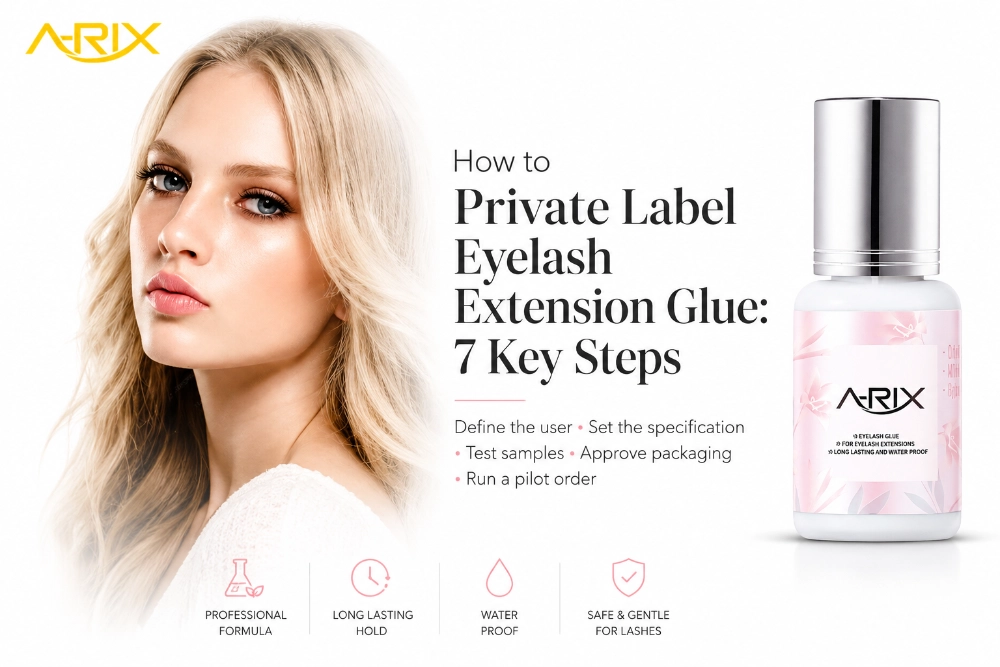
Private labeling eyelash extension glue follows seven practical steps: define the user, set the specification, choose the manufacturer, test samples, approve packaging, run a pilot order, and control repeat production. Skipping one step usually moves the problem to a more expensive stage.
- RIX brings eyelash product development, accessories, packaging support, production control, and export service into one supply system. The Eyelash Extension Glue High Flexibility Eyelash Glue 0.5 Sec Drying gives professional buyers a clear base for a fast, flexible salon adhesive line. Through its private label service, you can discuss samples, packaging, MOQ, wholesale production, and related lash products. When your specification is ready, contact the team with your target user, sales market, bottle plan, and expected order volume.
FAQ
What Is the Best Drying Speed for Private Label Lash Glue?
A 0.5-second glue suits experienced lash artists who place extensions quickly, while beginners usually need more adjustment time.
Is Lash Glue Suitable for Sensitive Eyes?
Lash glue intended for clients with sensitive eyes should be evaluated according to the exact formula, application instructions, working conditions, and available test information. Buyers should avoid assuming that terms such as “gentle,” “low irritation,” or “hypoallergenic” automatically apply unless the supplier can support those claims.
Should You Test Lash Glue Before Designing the Packaging?
Yes. Approve the formula and working performance first. Packaging should follow the final bottle, instructions, and confirmed product position.
How Many Technicians Should Test a Sample?
Use two or three technicians with different working speeds and record the salon conditions during each test.
Why Is a Pilot Order Important?
It helps you check filling, sealing, printing, transport performance, and batch consistency before committing to a larger quantity.
What Information Should You Send to A-RIX?
Share the target technician, preferred drying speed, glue color, bottle size, packaging plan, sales market, expected MOQ, and required product documents.