Trade shows are always a useful reality check for the beauty industry. Not take product displays and booth traffic in consideration, they reveal what buyers are actually prioritizing, what styles are getting attention, and where demand is moving next. At Cosmoprof Worldwide Bologna 2026, one of the largest international beauty trade fairs over the world, the scale alone made that clear: the event reported 3,104 exhibitors from 68 countries and more than 255,000 operators, underscoring how global and competitive the beauty supply chain has become. So people from all over the world will exhibit, our recap can reveal part of the market trend.
For lash manufacturers and private label suppliers, exhibitions like this are less about “what is new” in a general sense and more about which requests are repeating across markets. This year, what stood out most was not a single dramatic shift, but a stronger convergence around a few practical signals: buyers asked for more wearable lash styles, faster and more flexible customization, lower-risk MOQ options, and packaging that supports brand positioning instead of just protecting the product. That aligns with broader beauty purchasing behavior in 2026, where private-label buyers increasingly want speed, flexibility, and differentiation without committing to large, slow-moving inventories.
1. Natural-looking lashes are still leading demand
One of the clearest takeaways from recent beauty coverage is that consumers are still leaning toward lighter, softer, lower-maintenance beauty looks. Mainstream beauty media has described a strong move toward minimalist eye makeup, including “ghost lashes” and reduced reliance on heavy mascara or dramatic lash styling. Harper’s Bazaar also reported that runway beauty in Spring/Summer 2026 leaned into natural eyes, with a broader movement toward softer, more natural-looking definition.
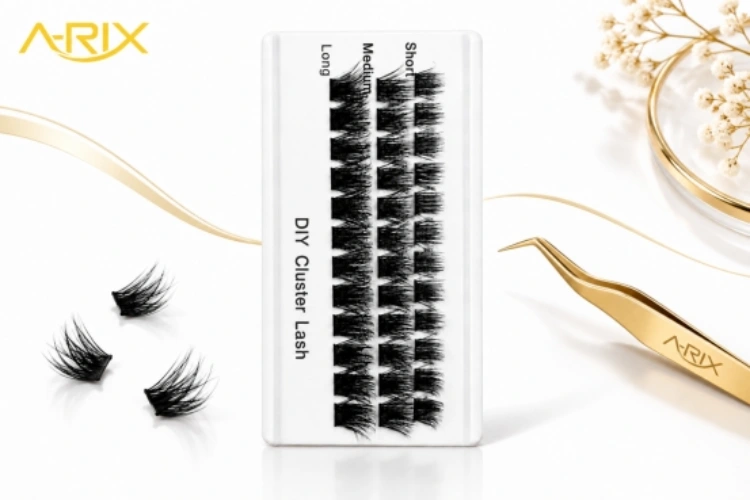
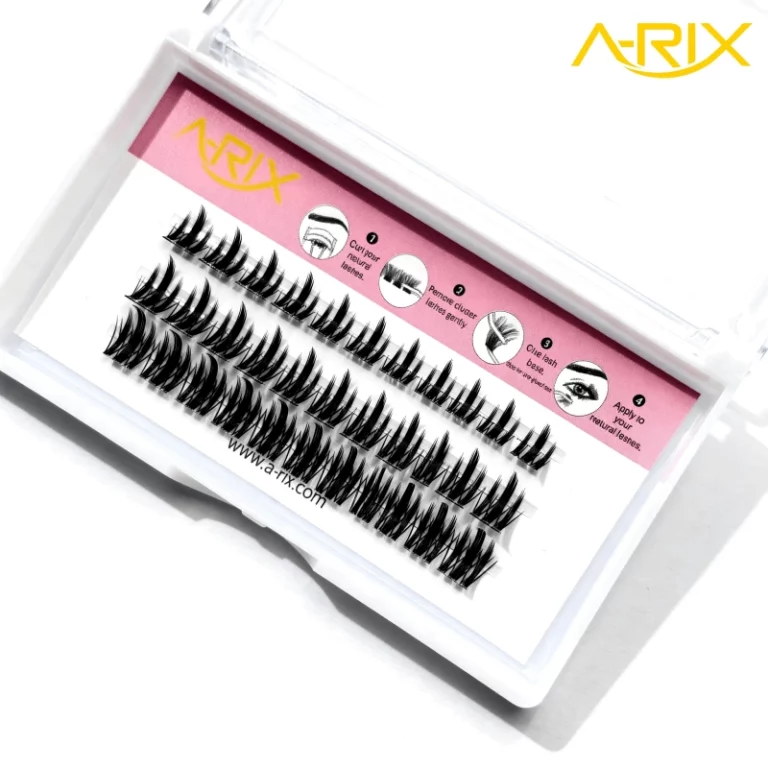
That macro trend showed up in buyer conversations too. Compared with highly dramatic full-volume styles, more attention is going to lashes that feel lightweight, wispy, airy, and easy to wear daily. Buyers were especially interested in styles that can fit multiple retail narratives at once: natural glam, clean beauty aesthetics, everyday wear, and beginner-friendly application. In practical sourcing terms, that means classic wispy strips, soft clusters, brown-tone lashes, and less aggressive volume profiles are still commercially attractive.
2. At the same time, “statement texture” has not disappeared
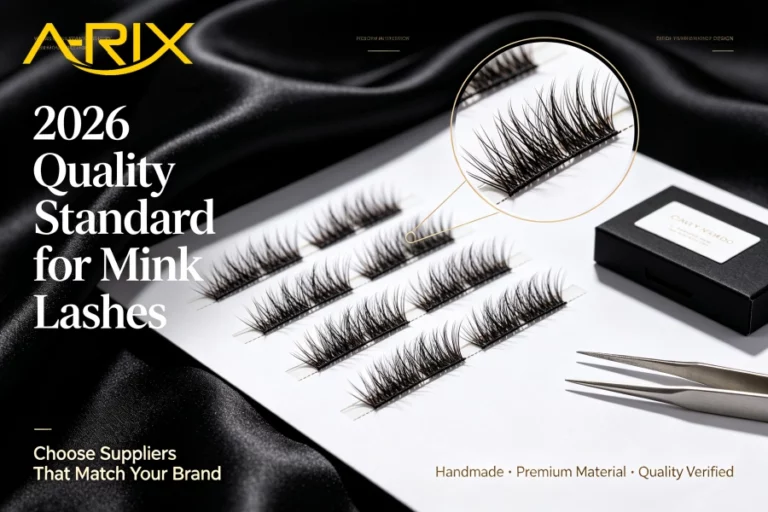
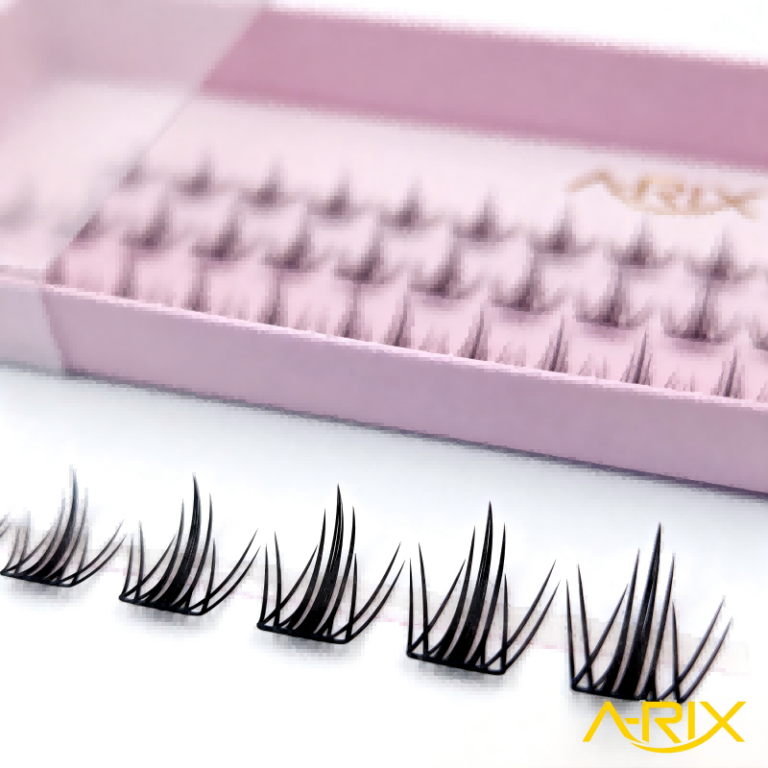
While natural styles are clearly important, that does not mean the market has become visually flat. Another visible direction is texture-driven styling—especially spiky, separated, manga-inspired, or anime-adjacent lash looks. Teen Vogue highlighted the continued popularity of manga lashes, noting their viral spread through TikTok and the broader Douyin-inspired beauty aesthetic.
What this means commercially is that the market is becoming more segmented, not simpler. Buyers are not necessarily looking for only one universal bestseller. Instead, many are thinking in terms of a balanced range: everyday natural styles for volume sales, plus a few more distinctive SKUs that help the brand look trend-aware and social-friendly. For factories, this is an important product-development signal. A strong catalog in 2026 is less about having hundreds of random styles and more about having a clear structure across wearable basics and trend-driven accents.
3. Buyer questions are becoming more operational
Another strong pattern was that many inquiries quickly moved beyond the product itself. Buyers still care about curl, length, density, band comfort, and finish—but increasingly, they also want to know:
- What is the MOQ?
- How fast can sampling be done?
- What packaging can be customized?
- What is the real lead time from approval to shipment?
- Can the supplier support small-batch testing before scale-up?
This is consistent with how private-label sourcing is evolving. Recent B2B manufacturing guides emphasize that buyers now compare suppliers not only on unit price, but also on customization model, MOQ flexibility, time-to-market, and execution reliability. Alibaba’s recent OEM/ODM guidance, for example, frames MOQ and customization depth as core decision factors, while private-label launch guides increasingly present lead time as a major commercial variable rather than a back-office detail.
For lash suppliers, this means the sales conversation needs to be better structured. Buyers are often not just shopping for lashes; they are shopping for a launch process. The supplier who can clearly explain specs, sample timing, packaging paths, approval checkpoints, and delivery windows is usually easier to trust than the supplier who only sends a product catalog.
4. Packaging is no longer a side topic
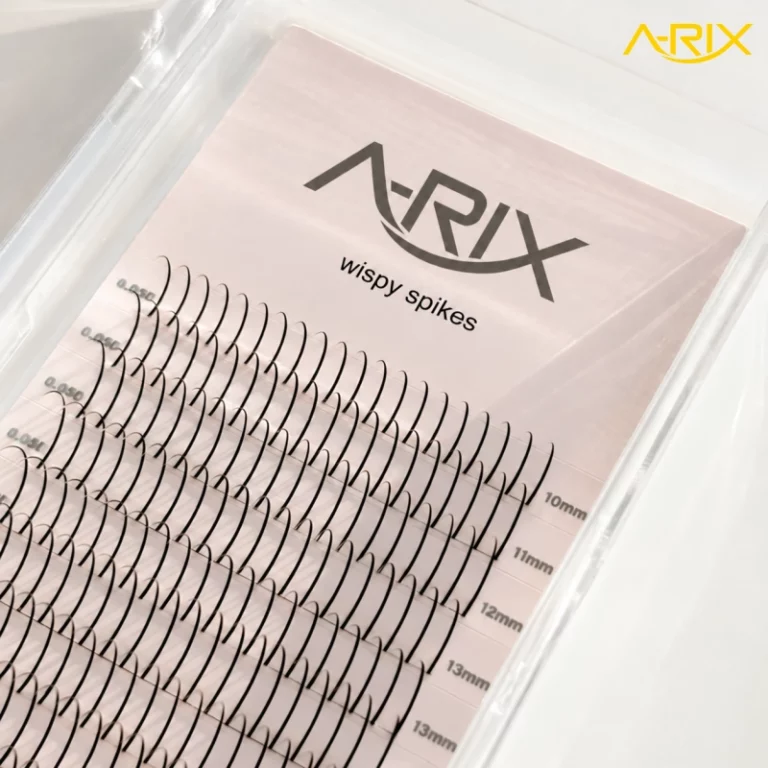
One thing that repeatedly stands out in private-label beauty sourcing is that packaging is now an important part of the brand decision, not just a fulfillment detail. Well packaging is becoming an essencial parts of a successful products. Before, the market competition not very fierce, you can do a ‘not bad’ packaging. But now, we can’t! If your products is not good looking, they can’t catch the eye, so can’t be sold. Buyers want outer boxes, trays, inserts, logo application, and presentation options that support their positioning—whether they sell through salons, marketplaces, TikTok shops, or boutique beauty retail. With increased market competition, it’s becoming increasingly difficult to differentiate products based on their individual characteristics. Therefore, there’s a greater demand for differentiation in eyelash packaging and layout. Private-label and white-label sourcing guides increasingly treat packaging as one of the most important levers for differentiation, especially for smaller brands entering crowded categories. Factories also needs to find out and give more solutions to customers to win the competition.
This matters even more in the lash category, because the product is highly visual and often purchased with strong expectations around style identity. A buyer may accept a standard base tray or stock lash format, but still want a branded sleeve, custom card, or upgraded retail box to make the product feel market-ready. In other words, many customers are not necessarily asking for the most complex customization—they are asking for the most efficient path to a sellable brand presentation. So them can get advantage for brands to distribute them products. And also, show the branding and marketing power.
5. Lower-risk ordering matters more than ever
A notable commercial reality in 2026 is that many buyers, especially emerging brands and smaller distributors, are trying to reduce inventory risk. That is one reason low-MOQ or staged-MOQ discussions are so common. In adjacent beauty sourcing guidance, private-label programs often distinguish between ready-to-ship, lightly customized, and fully customized models partly because each comes with a different balance of MOQ, cost, and lead time.
For lash factories, this creates an opportunity. Buyers are often more comfortable starting with a narrower SKU range, faster packaging decisions, and controlled trial volumes—then scaling once they see market response. Suppliers who can support that path are often better positioned than those who only optimize for large-volume orders. The conversation is shifting from “What is your cheapest price?” to “How can we launch with less friction and scale safely?”
6. What this means for lash suppliers going forward
If we had to summarize the post-exhibition signal in one sentence, it would be this: buyers want lashes that are easier to sell, and supply partners that are easier to work with. That means the winning combination is not just trend awareness. It is the ability to connect market taste with commercial execution.
For suppliers, that likely means focusing on five things:
- Build a product range anchored in natural, wearable, commercial styles.
- Keep a small but sharp set of trend-driven optionssuch as textured or manga-inspired looks.
- Offer clear private-label pathwaysinstead of vague customization promises.
- Treat packagingas part of the sales offer, not an afterthought.
- Make MOQ and lead time communicationsimple, realistic, and transparent.
Final thoughts
Exhibitions remain one of the best places to understand where real buyer demand is heading. What we observed this season was not a swing toward extremes, but a market that is becoming more selective, more brand-conscious, and more operationally practical. Buyers still care about beauty and trend relevance, of course—but they are also looking for partners who understand speed, presentation, flexibility, and risk control. At this stage of the market, that combination matters just as much as the product itself.