A Complete Buying Guide by A-RIX
In today’s beauty market,the mink eyelashes are often related to luxury, softness, and a natural finish. However, not all “mink lashes” have the same features. Many consumers find it very difficult to tell real mink hair eyelashes difference from the faux mink eyelashes, especially as modern faux mink technology continues to evolve better and better.
At A-RIX, we believe that tell customers make better choices. This guide will help you clearly understand the differences between real mink and faux mink lashes. So you can choose the option that best meets your beauty routine, values, and expectations.
1.What Are Real Mink Hair Eyelashes?
Real mink hair eyelashes are made from natural mink fur, traditionally get from mink farms. The hair is cleaned, processed, and shaped into lash strips or extensions.
Characteristics of Real Mink Eyelashes
Made from natural animal hair
Fine, tapered strands with natural variation
Lightweight and soft in texture
Subtle, natural sheen rather than high shine
Less uniform appearance
Because mink fur is a natural material, each lash strip may look slightly different. This irregularity is often described as “natural” or “wispy,” which appeals to some wearers.
However, real mink lashes also require more care and are sensitive to moisture, oil, and environmental conditions.
2.What Are Faux Mink Eyelashes?
Faux mink eyelashes are 100% synthetic fiber, it usually made from special fibers such as PBT (polybutylene terephthalate). At A-RIX, our faux mink lashes are carefully made to mimic the softness, curl, and appearance of natural mink. it without using animal-derived materials.It will make good effect.
Characteristics of Faux Mink Eyelashes
Completely cruelty-free and vegan
Ultra-soft, lightweight fibers
Consistent curl and lash shape
Durable and reusable
Resistant to humidity and daily wear
High-quality faux mink lashes are now widely preferred by professionals and everyday users alike due to their reliability and ethical advantages.
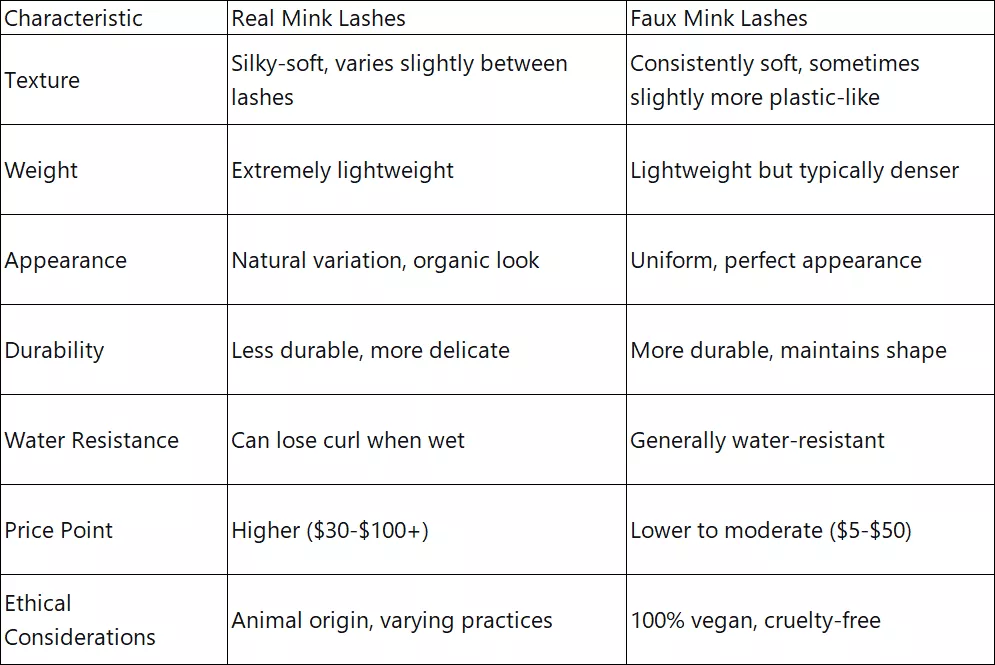
- Texture Test: Feel the Difference
One of the first ways people try to distinguish real mink from faux mink is by touch—but this method isn’t always reliable.
Real Mink Texture:
Feels ultra-soft, like fine natural hair
Slight variation in strand thickness
May feel less “springy” when bent
Faux Mink Texture:
Smooth and soft, sometimes even softer than real mink
More elastic and resilient
Uniform texture from root to tip
Important note:
Many people assume real mink must feel softer, but that’s not always true. High-quality faux mink lashes can feel just as soft—or softer—than real mink, especially after multiple uses.
- Visual Differences: What to Look for Closely
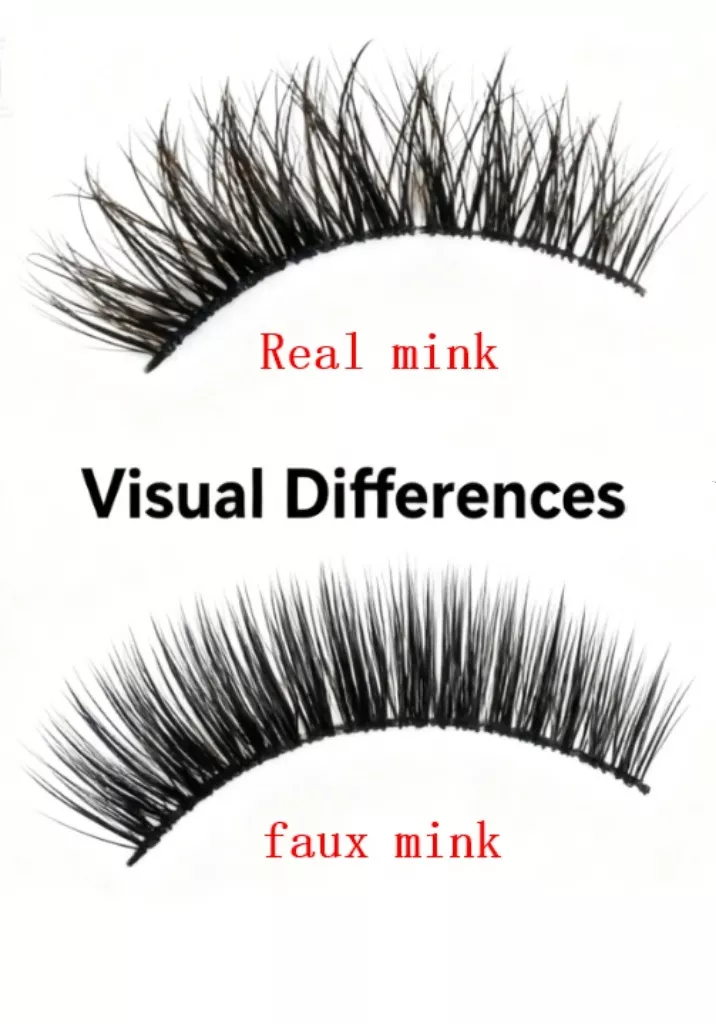
Looking closely at the lashes under good lighting can reveal subtle differences.
Real Mink Eyelashes:
Slightly uneven strands
Less dramatic shine
More natural taper at the tips
Can appear messier or less symmetrical
Faux Mink Eyelashes:
More consistent curl pattern
Balanced length and density
Often appear more “perfect” on the lash band
Slightly more defined shape
If a lash style looks extremely uniform and flawless, it’s likely faux mink.
- Curl and Longevity
This is one of the biggest practical differences between the two.
Real Mink:
Curl may drop over time
Sensitive to humidity and moisture
Requires more careful storage
Shorter lifespan with frequent wear
Faux Mink:
Holds curl extremely well
Resistant to humidity
Can be worn and cleaned multiple times
Ideal for long-term use
For daily wear or professional makeup use, faux mink often performs better.
- Water Test (Not Always Recommended, but Informative)
Some people mention a “water test” to identify lash material.
Real mink hair absorbs moisture more easily.
Faux mink fibers repel water and dry quickly.
However, soaking lashes can damage them, especially real mink. This test is not recommended for expensive lashes but helps explain why faux mink lasts longer in real-life conditions.
- Ethical and Environmental Considerations
This is a major reason many consumers are moving away from real mink.
Real Mink:
Involves animal farming
Ethical standards vary by supplier
Not considered cruelty-free by many organizations
Faux Mink:
Completely cruelty-free
Vegan-friendly
More aligned with modern beauty values
Today, many brands label their faux mink lashes as “cruelty-free mink”, which can be confusing. Always check material descriptions, not just marketing terms.
- Price Differences: Is More Expensive Always Better?
Real Mink Lashes:
Usually more expensive
Higher production cost
Price does not always guarantee quality
Faux Mink Lashes:
Available at many price points
Often more cost-effective
Better value for frequent wearers
Interestingly, some premium faux mink lashes cost more than low-quality real mink lashes. Price alone is not a reliable indicator.
- Common Myths About Mink Lashes
Myth 1: Real mink lashes always look better
Not true. Many faux mink lashes look more polished and photogenic.
Myth 2: Faux mink feels fake
Modern faux mink fibers are incredibly advanced and natural-looking.
Myth 3: You can always tell by looking
Even professionals can’t always tell without brand information.
- Which One Should You Choose?
[Image: Model wearing natural faux mink lashes
Choose real mink lashes if:
You prefer natural materials
You don’t mind extra care
Ethics are not a concern for you
Choose faux mink lashes if:
You want cruelty-free beauty
You wear lashes often
You want durability and consistency
You live in humid environments
For most users today, faux mink lashes are the better overall choice—not because they’re “fake,” but because they’re thoughtfully engineered for modern beauty routines.
- burning a single fiberunder controlled conditions:
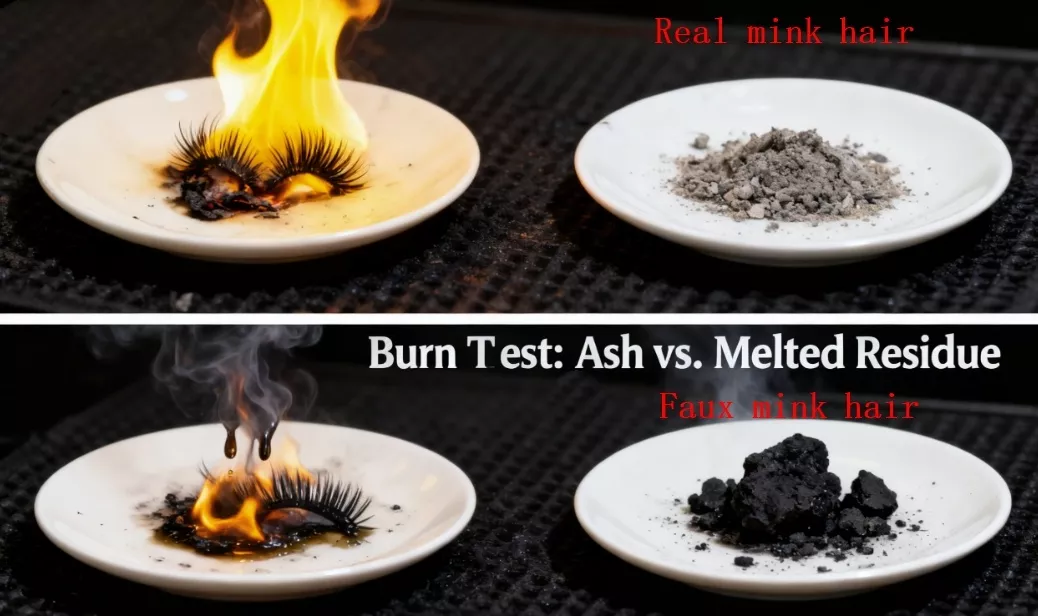
Real Mink (Keratin Protein):
Combustion: Will ignite and burn relatively quickly.
Smell: Produces the distinct, pungent odor of burning hair or feathers.
Residue: Leaves behind a brittle, charred black ash that crumbles easily.
Faux Mink (Synthetic Plastic – usually PBT/PET):
Combustion: Will typically melt first, then may ignite.
Smell: Produces a chemical odor of burning plastic.
Residue: Forms a hard, melted, black or brown bead at the tip. It may also smoke heavily and can drip while molten.
Final Thoughts
We have to admit that distinguishing real mink hair eyelashes from faux mink hair eyelashes isn’t always easy—and that’s okay. The beauty industry has evolved to a point where synthetic does not mean inferior. In fact, faux mink lashes often outperform real mink in comfort, longevity, and ethics.
Instead of focusing on labels alone, pay attention to:
How the lashes feel on your eyes
How they perform throughout the day
How they align with your values
Nowadays, the best lashes are the ones that make you feel confident,make you comfortable, and make you beautiful.You don’t need always care what they’re made of.
Explore the A-RIX collection and discover how expertly designed faux mink lashes can elevate your look with confidence.