Curl loss is one of those lash problems that looks small at first. A tray arrives, the lashes look fine, the curl looks close enough, and the order seems safe. Then the product reaches salons. Lash artists start saying the fans do not open the same way. Some curls look flatter after storage. Some clients ask why the final set does not look as lifted as expected.
For a beauty brand or lash wholesaler, this is not just a product detail. Curl retention affects repeat orders, salon trust, and how stable your SKU looks across different batches. A lash extension tray can have nice fiber and still fail if the curl is not controlled well.
A-RIX is an eyelash manufacturer that works across DIY cluster lashes, strip lashes, eyelash extensions, accessories, and packaging. The company presents itself as a vertically integrated lash manufacturer with 20+ years of OEM/ODM expertise and cooperation with 200+ global brands. It also supports product catalogs, specifications, customization, samples, production, quality control, and export delivery. For this article, the product worth recommending is 0.03mm Mega Volume Eyelash Extension, because curl retention matters most when you are selling volume lash extensions that need to fan smoothly and stay consistent.
Why Curl Loss Becomes a Bulk Order Problem
A single lash tray can make a good first impression. Bulk orders are different. Once you order by carton, the same curl must stay stable across materials, tape, trays, packaging, and repeat production.
Curl Looks Fine in Samples but Changes in Bulk
Samples are usually checked more slowly. Bulk production runs faster and involves more material lots. This is where curl differences can appear.
If you only approve a sample by photo, you may miss the real issue. A C curl may look slightly closer to B in one batch. A D curl may look too open after storage. For lash extensions, these small changes matter because lash artists build full sets based on repeatable curl behavior.
Weak Curl Control Can Increase Salon Complaints
Salon buyers care about speed and final look. If the curl is unstable, lash artists spend more time adjusting fans, mixing trays, or explaining the final result to clients.
For private label buyers, curl loss can also make your brand look inconsistent. One order sells well, the next one feels different. That is why curl retention is not only a technical point. It becomes a brand trust issue.
Buyers Should Check Factory Reasons, Not Only Product Photos
A supplier should be able to explain why lashes keep curl. If the answer is only “good quality,” that is not enough.
You should ask about fiber type, heat setting, curl testing, tape stickiness, packaging pressure, and final inspection. A factory that knows the cause can usually control the result better.
What Makes False Lashes Lose Curl
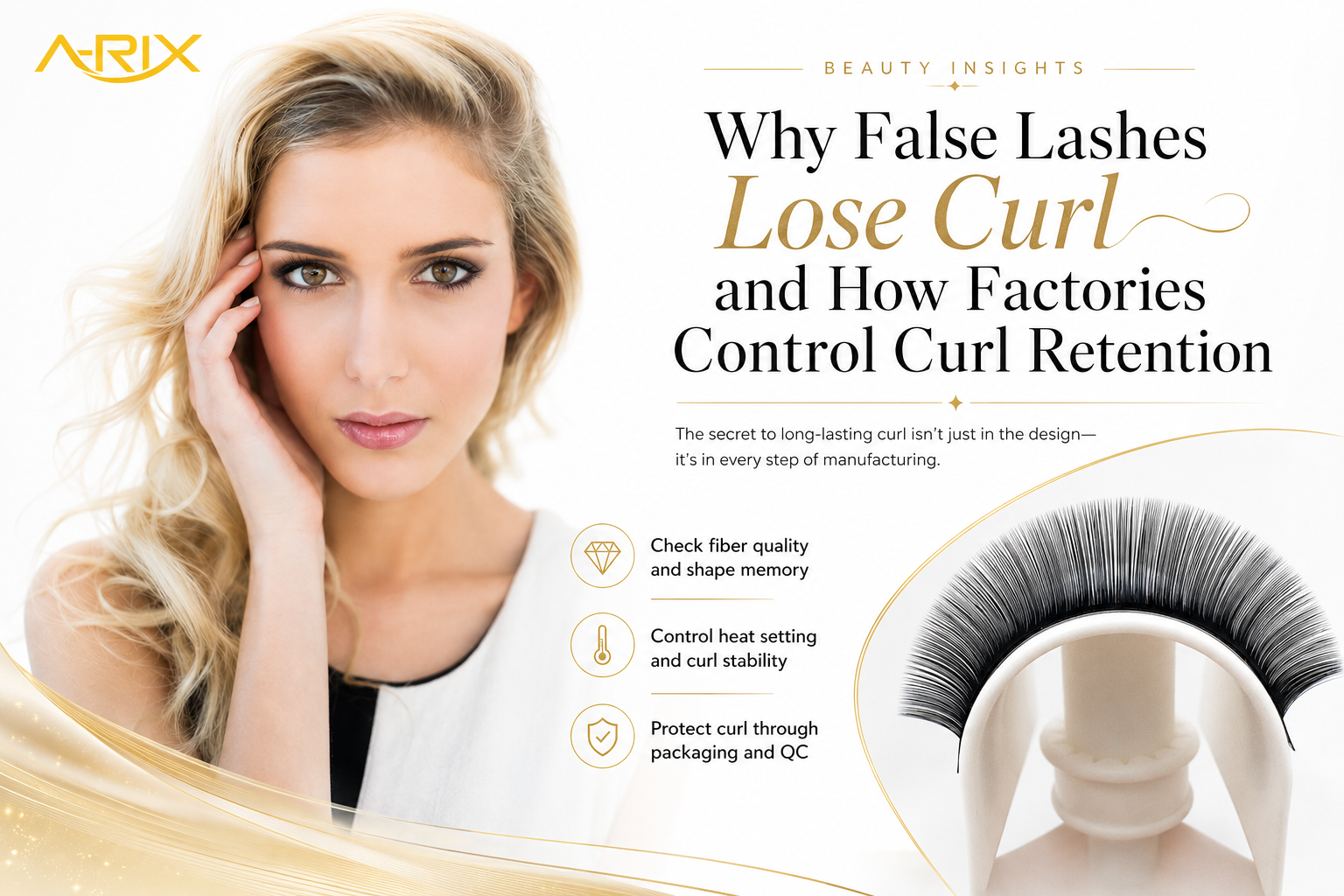
Curl loss usually comes from several points at the same time. The fiber may be weak. The shaping process may be rushed. The packaging may press the curl. The storage environment may also affect the final shape.
Poor Fiber Choice Weakens Shape Memory
Fiber quality decides how well the lash can hold a curve. If the fiber is too soft in the wrong way, it may collapse. If it is too hard, it may not fan well and may feel stiff during application.
The A-RIX knowledge base also points out that lash material affects weight, flexibility, deformation resistance, and comfort. Its product information describes PET or synthetic fiber use for different lash products, plus controlled fiber diameter and softening treatment for lightweight wear. For volume lash extensions, PBT is a practical choice because it can help lashes stay light while keeping curl shape.
Heat Setting Decides Curl Stability
Curl is not only made by bending the fiber. It must be shaped and fixed. If heat setting is not stable, the curl may relax after packing or after time in storage.
This is why “curl retention” should be treated as a factory process, not only a product claim. The factory needs steady shaping conditions, trained workers, and inspection after the curl is formed.
Packaging and Storage Can Flatten the Curl
Even well-made lashes can lose shape if packaging presses them. A tray that is too tight, a card that does not support the strip, or an outer carton with too much pressure can all affect the lash curve.
For bulk orders, packaging should protect the curl during storage and shipping. It should not only look clean. It should keep the lash tray stable until the salon opens it.
How Factories Control Curl Retention Before Shipment
Good curl control starts before the lash is finished. It begins with material selection and continues through shaping, tape handling, tray placement, packaging, and final inspection.
Raw Material Checks Reduce Batch Risk
Raw material changes can create curl changes. If one fiber lot behaves differently, the finished lash may not match the approved sample.
A-RIX’s quality system in the knowledge base starts from raw materials, with supplier qualification checks and random material inspections. It also sets quality checkpoints through production and finished goods inspection. For buyers, this helps reduce the chance that one bulk order feels different from the last.
Shaping Process Keeps Curl Angles Stable
Curl retention depends on repeatable shaping. The factory should control the same curl angle across trays, not only across one small sample.
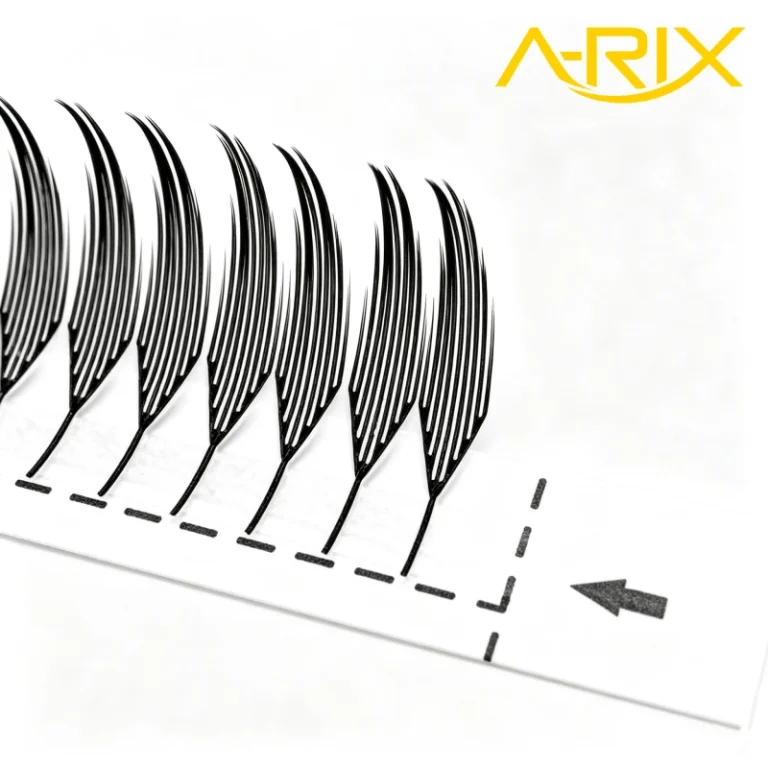
For volume lashes, this also affects fan making. If the curl is uneven, the fan may look messy once spread. Lash artists will feel that difference right away.
Final QC Should Check Curl, Length and Fan Opening
Final inspection should not stop at “no damage.” For eyelash extension trays, QC should check curl angle, length, thickness, tape condition, fan opening, glue residue, and tray cleanliness.
A-RIX’s knowledge base mentions finished product inspection covering style, curl, length, durability, packaging material matching, and final checks after packaging. That matches the real problem here: curl must be checked before shipment, not after the buyer receives complaints.
Why 0.03mm Mega Volume Eyelash Extension Fits Curl Retention Needs
For curl retention, volume lash extension is a better fit than a general strip lash because salon users care about curl, fan shape, tape, thickness, and repeat performance every day.
Imported PBT Fiber Supports Soft and Flexible Fans
A-RIX’s product page says its volume lashes are made with imported PBT fiber to keep the lashes soft, light, flexible, and easy to make spreadable fans. It also notes that the strips have no glue residue and can use different materials, finishes, and tape stickiness options.
This matters for curl retention because flexible fiber is easier to fan, while stable fiber helps the curl keep its shape. For lash artists, that balance is important. They need soft handling, but they also need the curl to stay clear.
0.03mm Thickness Helps Build Volume Without Extra Weight
The “0.03mm” point is useful for mega volume work. A thinner fiber lets artists build fuller fans while keeping the final set lighter. The product page explains that 0.03 refers to the lash diameter and that several ultra-fine lashes can be fanned together to create a miniature fan. It also describes this as a way to create volume with fewer attachment points and less weight burden on natural lashes.
For buyers, this is a strong selling point. You can talk about volume, softness, and lash protection without making the product sound exaggerated.
Multiple Curl Options Help Buyers Match Salon Demand
A-RIX lists the product with 0.03/0.05/0.07 thickness, 6–22mm length, black or colorful options, PBT material, customized packaging, and 7–30 days delivery time. The page also mentions L curl, M curl, M+ curl, LC curl, and LD curl for foxy lash sets, with manga lash, anime lash, and wet lash sets using volume lash close fan spikes.
That gives buyers more room to build a product line. You can choose lighter, fuller, or more lifted lash effects without changing supplier direction every time.
What Should Buyers Ask Before Ordering Volume Lash Extensions
Before placing a bulk order, do not only ask for the price. Price matters, but curl stability affects whether your customers reorder.
Ask About Curl Testing and Repeat Orders
Ask the supplier how they test curl before shipment. You can also ask whether the bulk batch will be compared with the approved sample.
If you are planning repeat orders, make this point clear early. The real value is not one good tray. It is whether the same curl can return in the next order.
Confirm Tape, Finish and Fan-Making Performance
Volume lash extensions depend on tape performance. If the tape is too sticky, lashes may pull badly. If it is too weak, fans may not form smoothly.
A-RIX’s product page mentions low sticky tape, medium sticky tape, sticky tape, and no glue residue. It also lists super matte, semi-shiny, and shiny finishes. These options matter because different lash artists and markets may prefer different pickup feel and finish.
Check MOQ, Packaging and Delivery Details
For planning, ask about MOQ, delivery time, and packaging before approving the sample. A-RIX lists MOQ as 500pcs, customized packaging accepted, and delivery date as 7–30 days for this product.
If you are building a private label line, packaging should protect the curl and match your sales channel. A nice box is useful, but a tray that keeps lash shape is more important.
Conclusion: How A-RIX Helps Buyers Control Curl Quality
Curl retention is a factory issue, a product issue, and a buyer checklist issue at the same time. If you only check the first sample, you may miss the risks that appear in bulk production.
A-RIX Connects Product Development With Factory Control
A-RIX supports OEM/ODM, samples, specifications, production, raw material inspection, in-process checks, final pre-shipment inspection, customized labeling, and logistics options. This gives buyers a clearer path from product idea to repeat order.
For curl retention, that full process matters. The factory needs to control material, shaping, tape, packaging, and final inspection together.
0.03mm Mega Volume Eyelash Extension Is Worth Recommending
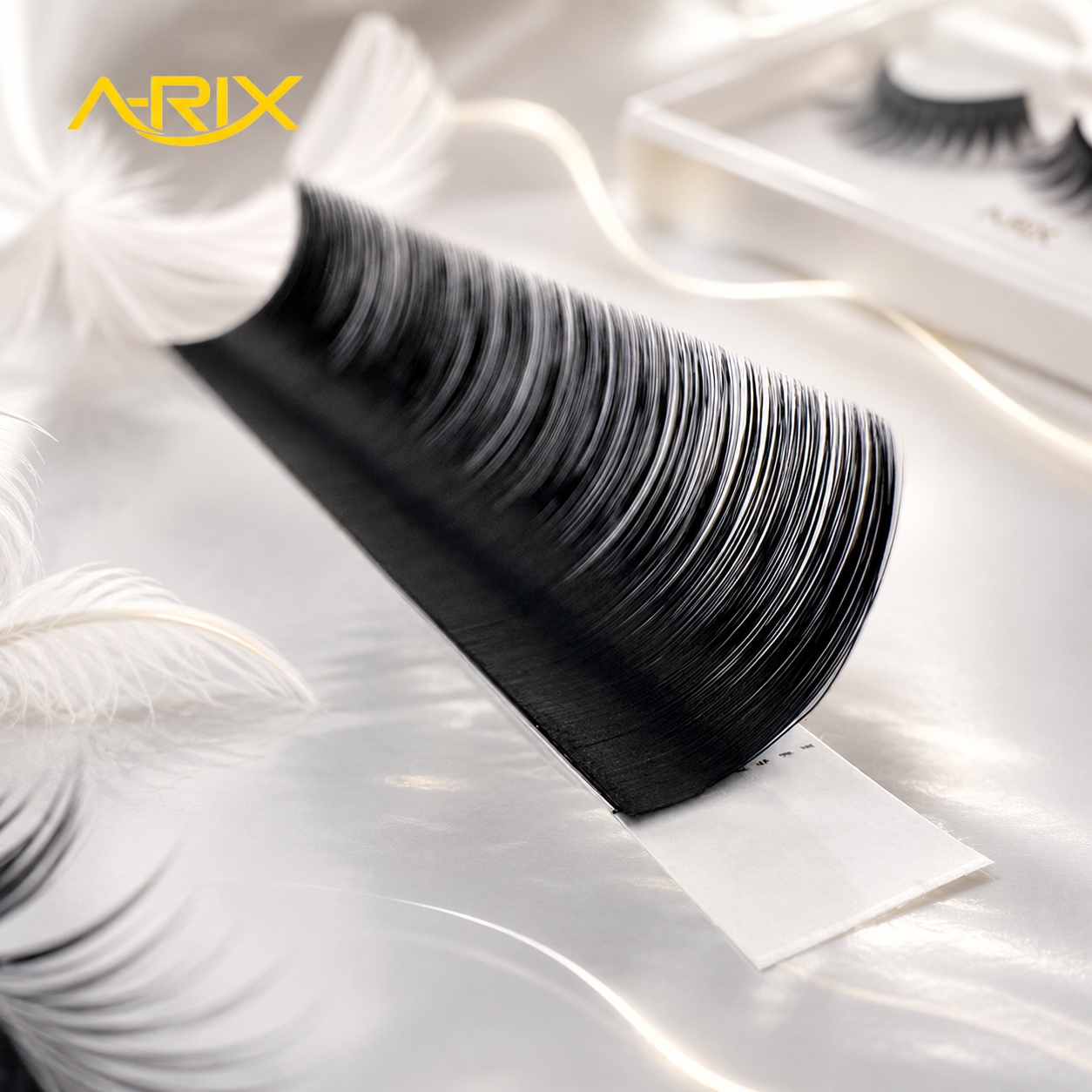
Long time curl lasting 0.03mm volume lashes are a good match for buyers who sell to salons, lash studios, or private label extension brands. The product supports mega volume fanning technique, extra light flexible fans, long time curl lasting, different tape options, and customized packaging.
It is not just a “volume” product. It gives you a way to talk about curl retention, fan quality, weight control, and salon workability in one product story.
Move From Product Review to Service and Contact
If you are checking a supplier for curl retention, prepare sample notes before asking for a quote. List curl, length, thickness, tape, finish, packaging, and target market. Then use A-RIX service to discuss OEM/ODM details and A-RIX contact for samples, pricing, or bulk order questions.
FAQ
Q1: Why Do False Lashes Lose Curl After Storage?
A1: Curl loss can come from weak fiber, poor heat setting, packaging pressure, humidity, or unstable production control. For bulk orders, you should test more than one tray and compare the batch with the approved sample.
Q2: Is PBT Good for Curl Retention in Volume Lash Extensions?
A2: Yes. PBT is widely used for lash extensions because it can stay light, flexible, and shape-stable. For mega volume lashes, that balance helps with fan making and curl holding.
Q3: Why Is 0.03mm Thickness Useful for Mega Volume Lashes?
A3: 0.03mm fiber is very fine, so lash artists can build fuller fans without adding too much weight. That helps create volume while reducing burden on natural lashes.
Q4: What Should Buyers Check Before Ordering Volume Lash Extensions?
A4: Check curl consistency, length accuracy, thickness, tape stickiness, fan opening, glue residue, packaging support, MOQ, delivery time, and whether the supplier can repeat the same standard in the next order.
Q5: Why Recommend A-RIX 0.03mm Mega Volume Eyelash Extension?
A5: It fits this topic because it uses imported PBT fiber, supports 0.03/0.05/0.07 thickness, offers multiple curls and lengths, has long time curl lasting, and accepts customized packaging for bulk and private label buyers.