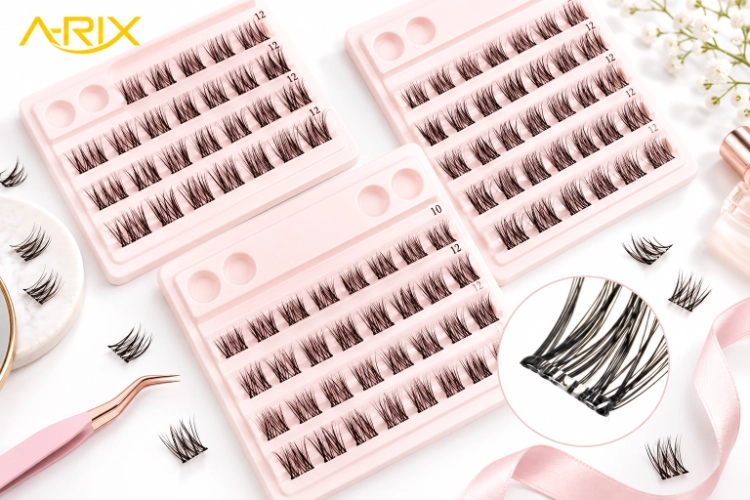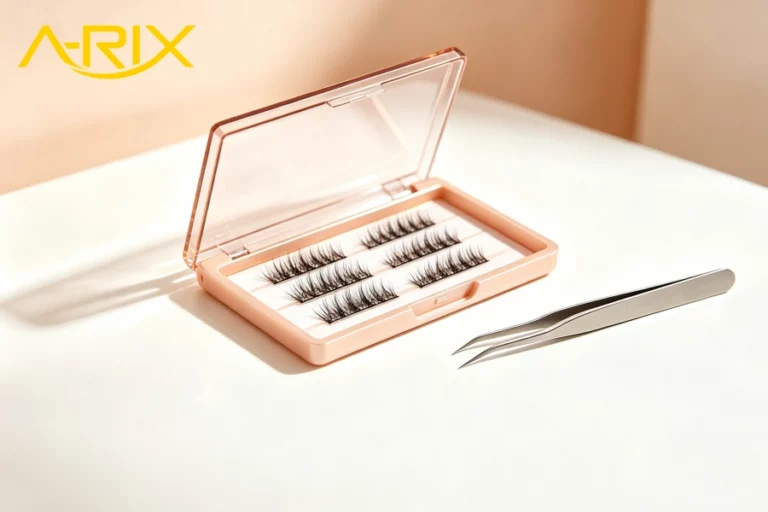
Cluster lashes should not start poking your eyelids or making your eyes water soon after application. Still, this happens quite often, especially for people who already know their eyes are sensitive.
The problem is not always the lash fiber itself. Adhesive, a thick base, too much weight, poor placement, residue, and rough removal can all make a cluster lash feel uncomfortable.
For brands, wholesalers, salons, and DIY lash sellers, this matters because customers rarely describe the technical cause. They usually just say the lashes feel itchy, heavy, sharp, or uncomfortable.
A-RIX supplies DIY cluster lashes, strip lashes, eyelash extensions, lash accessories, packaging, and custom lash products. If you are choosing cluster lashes for sensitive eyes, it makes more sense to look at the whole setup rather than rely on a simple “comfortable” label.
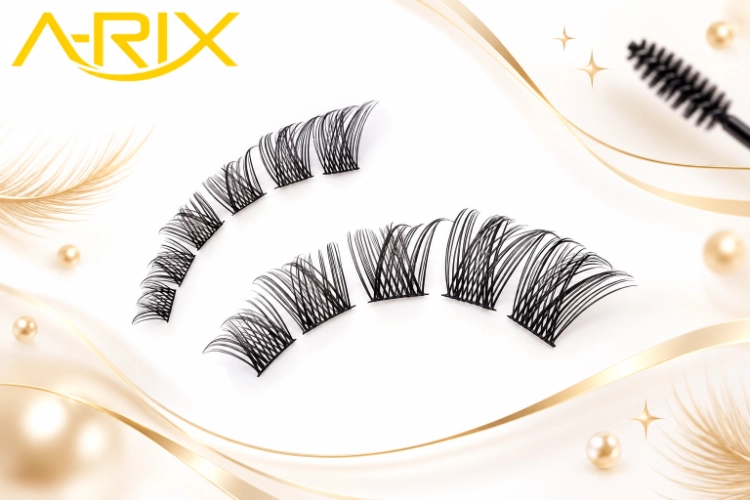
Why Do Cluster Lashes Irritate Sensitive Eyes?
Sensitive-eye complaints usually come from a few common areas. Looking at the exact feeling can help you work out where the problem starts.
| Cause | What the User May Notice | What to Check |
|---|---|---|
| Adhesive sensitivity | Itching, watering or redness | Adhesive formula |
| Too much adhesive | Sticky or tight lash line | Amount of glue |
| Thick or sharp base | Poking when blinking | Root thickness and edge |
| Too much weight | Heavy eyelids | Density and cluster size |
| Wrong placement | Scratching or pressure | Position near lash line |
| Residue or dirty tools | Growing discomfort | Tools and lash roots |
| Rough removal | Tenderness or pulling | Removal method |
Adhesive and Residue Can Cause Itching or Tightness
Adhesive sits very close to the eye area. If itching or watering starts after using a new glue, that product needs to be checked as well.
Too much adhesive can also make several cluster roots stick together. Once dry, the lash line may feel hard or tight.
More glue does not always mean better hold. A small, controlled amount is usually easier to position and remove.
Cluster Base and Lash Weight Can Cause Poking
A thick or sharp cluster base is one of the first things to check when a customer says the lashes hurt while blinking.
Look at the root. Is one edge sticking out? Does the base feel stiff? Is one segment sitting at a strange angle?
Weight matters too. Dense clusters contain more material, and users with fine natural lashes may notice that heaviness after a few hours.
Placement, Hygiene and Removal Also Matter
Even a good lash can feel bad when it sits too close to the waterline.
Old adhesive, makeup residue, oil, or dirty tools can also affect repeat wear. Rough removal may pull natural lashes and leave the lash line sore.
That is why comfort is not only a material issue.
How Can You Tell What Is Causing the Discomfort?
Not all irritation feels the same. A sharp point usually has a different cause from general itching or heavy eyelids.
Poking Usually Points to the Base or Placement
If the user can point to one exact place that hurts, check that segment first.
The base may be sticking out, two clusters may overlap, or the lash may sit too close to the eyelid.
This is also where format differences matter. The guide on cluster lashes vs individual lashes explains how both styles differ in structure and application.
Itching or Redness Means the Adhesive Needs Checking
General itching is different from one sharp point.
Check whether adhesive touched the skin, whether too much was used, and whether the same issue appears when the lash style changes but the glue stays the same.
If irritation continues, the user should stop wearing the product.
Heavy Eyelids Usually Point to Density
A set that feels fine at first but tiring later may simply be too dense.
Try fewer segments, slightly shorter lengths, or a lighter lash map. Customers do not always need maximum volume across the entire lash line.
How Can You Reduce Cluster Lash Discomfort?
There is rarely one single fix. Most of the time, better comfort comes from correcting a few small things together.
Choose a Thin, Smooth and Lightweight Base
The root sits closest to the lash line, so base thickness and edge finish matter.
Check whether the base is low-profile, smooth, and flexible enough to follow the natural curve of the lash line.
Weight should be considered together with density. A cluster can still look full without having a bulky root.
The existing Best Lash Clusters for Sensitive Eyes guide also covers cluster weight, application, removal, and natural lash breakage.
Keep Clusters Away From the Waterline
If one cluster scratches immediately after placement, move it.
Do not continue building the whole set around a badly positioned piece. It is easier to fix one segment early than remove the full lash map later.
Use Less Adhesive and Remove Slowly
Follow the adhesive instructions instead of adding extra glue for security.
During removal, loosen the bond first. If the cluster still pulls on the natural lashes, give the removal process more time.
Less unnecessary adhesive going on usually means less pulling when it comes off.
Which Cluster Lash Features Matter Most for Sensitive Eyes?
When you are sourcing cluster lashes, “comfortable” is too broad to use as a buying standard.
You need details you can actually inspect.
You can review the wider range of A-RIX lash products when comparing DIY Cluster Lash, 3D Printing Laser Cut – Cluster Lash, strip lash, extensions, and accessories.
Base Thickness and Edge Shape Should Be Consistent
Look at several clusters under good lighting.
Check whether the roots stay smooth and whether the base thickness looks similar from piece to piece.
A bulky or uneven root creates more material close to the lash line and may become noticeable when the customer blinks.
Weight and Fiber Distribution Work Together
Weight is not only about material.
Fiber count, length, density, and root construction all affect how the cluster feels.
A better sample keeps visible volume without creating one thick block around the root.
Manufacturing Consistency Matters in Bulk Orders
One good sample is not enough.
Check several trays for root shape, cluster size, shedding, fiber spacing, and overall fit.
If some pieces feel comfortable and others do not, that problem will eventually appear in customer feedback.
Which Cluster Lash Features Are Better Suited to Sensitive Eyes?
For buyers focused on reducing root bulk and lash weight, laser-engineered DIY cluster lashes are a practical option to compare.
The most suitable option is the laser-engineered DIY cluster lashes.
It is a PET Cluster Lash made with Laser Cutting. The product specification lists a 0.035 mm ultra-thin base and a 0.02 g ultra-light structure.
These specifications are directly relevant when buyers are trying to reduce root bulk and unnecessary lash weight.
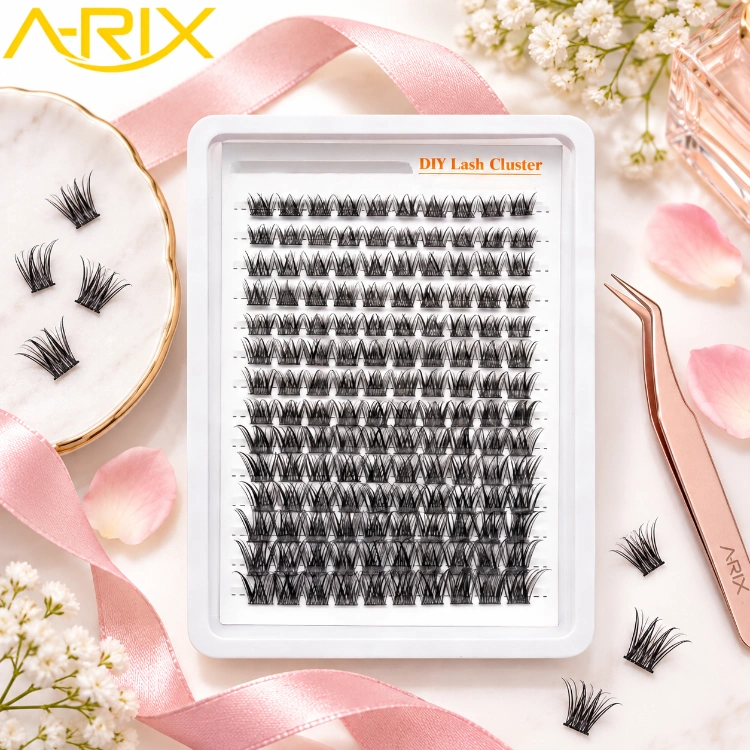
The 0.035 mm Ultra-Thin Base Reduces Root Bulk
The 0.035 mm ultra-thin base gives buyers a clear specification to check.
A thinner base means less material around the root area, which is useful when customers complain about bulky cluster bases or a noticeable feeling during blinking.
It does not guarantee zero irritation. Adhesive, placement, personal sensitivity, and wear habits still matter.
The 0.02 g Lightweight Structure Helps Control the Set
A lighter cluster makes it easier to build the lash map gradually.
Users can place a few segments first, check the feel, then add more where needed.
For buyers, weight also gives you another measurable point when comparing samples.
Laser Cutting Makes the Root Easier to Inspect
Laser Cutting gives the cluster a more defined root structure.
During sampling, check whether the root stays flat, clean, and consistent across the tray.
The value here is not a “no irritation” promise. It is a construction detail you can actually inspect.
What Should Brands Check Before Bulk Ordering?
A lash may look good in the tray and still create complaints after wear.
That is why sampling should cover feel as well as appearance.
Compare Several Trays, Not One Sample
Check cluster size, root shape, fiber distribution, curl, shedding, and how easily each piece comes off the tray.
Then test the lash with the adhesive system you plan to sell.
If the product will be sold as a DIY kit, the lash and adhesive should be tested together.
Ask Specific Questions During Wear Tests
Do not only ask, “Is this lash comfortable?”
Ask whether anything pokes while blinking, whether the set becomes heavy, whether the roots feel bulky, and whether removal pulls on natural lashes.
Specific feedback is much easier to use during product development.
Give the Factory Clear Product Changes
“Make it more comfortable” is not a useful production instruction.
“Reduce root bulk,” “keep the edge smooth,” or “match the approved sample weight” is much clearer.
A-RIX provides OEM and ODM lash services for product development, packaging, sampling, and private-label projects.
When Should Someone Stop Wearing Cluster Lashes?
There is a difference between noticing a new lash and continuing to wear something that is clearly causing irritation.
Stop Wearing a Cluster That Keeps Poking
If one segment keeps hurting, remove it and inspect the position and base.
A badly placed cluster rarely becomes comfortable simply because the user leaves it on longer.
Stop Using a Product When Irritation Continues
If the eye area becomes increasingly itchy, red, swollen, painful, or watery, stop using the product.
Do not keep applying the same lash or adhesive to an already irritated area.
Do Not Treat “Sensitive Eyes” as a Guarantee
No lash structure can guarantee the same response from every wearer.
A thin base, lower weight, smooth roots, and controlled manufacturing can reduce some physical causes of discomfort, but personal sensitivity and adhesive response still vary.
What Should Buyers Take Away From Cluster Lash Irritation?
Cluster lashes can irritate sensitive eyes for several reasons, and the lash fiber itself is only one part of the issue.
Find the Physical Cause First
Poking often points to root shape or placement.
Heaviness usually points to density or weight.
Itching and redness mean the adhesive and residue also need attention.
Once you separate these complaints, it becomes easier to choose the right product.
Use Measurable Details When Sourcing
Base thickness, weight, root finish, fiber distribution, and consistency are much more useful than a broad comfort claim.
Laser-cut cluster lashes with a thin base and lightweight structure are worth testing when customers often complain about bulky roots or heavy sets.
If you need samples, packaging details, or private-label specifications, you can contact the A-RIX team to discuss the exact lash style and order requirements.
FAQ
Why Do My Cluster Lashes Feel Itchy?
Check the adhesive and any residue around the roots. Stop wearing the product if irritation continues.
Why Do Cluster Lashes Poke When I Blink?
The segment may sit too close to the eyelid or waterline, or the base may be thick, stiff, uneven, or badly positioned.
Does a Thinner Cluster Lash Base Help With Comfort?
A thinner base reduces bulk near the lash line, but comfort still depends on placement, adhesive, weight, and the individual wearer.