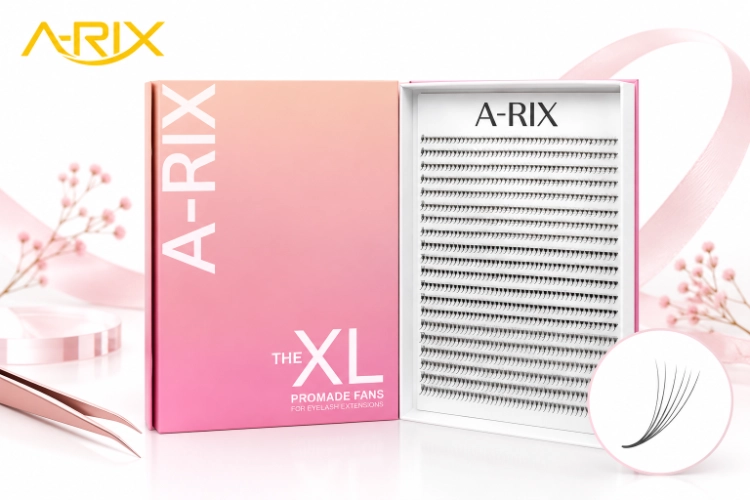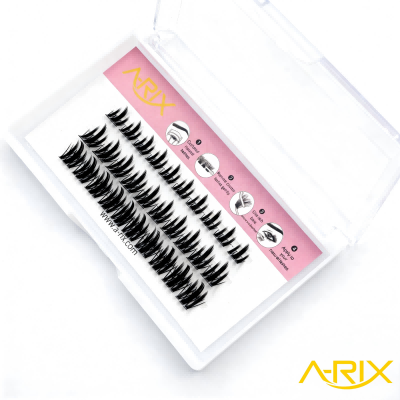
When developing cluster lashes for sensitive eyes, brands need to ask more than which style looks good in a product shot. The lash construction, adhesive, application and packaging all have to work together to provide a comfortable, consistent DIY experience. Even a great cluster can have rigid bases, uneven edges, be too bulk or even be difficult to apply but all of these issues can be minimized by a good design. However, the suitability of the product will ultimately depend on the individual user and the rest of the product around the cluster.
When shopping for products to resell as a private-label or wholesale item, first determine your end-user. A salon retail product may contain very light natural-looking clusters with very simple application instructions. On the other hand, an online kit may require a balanced length mix, optimal tray organization, and sturdy shipping protection. When searching for ‘cluster lashes for sensitive eyes’ ensure that the vendor can document their sourcing and evaluation process for making hypoallergenic/irritation-free claims as opposed to just saying they are.
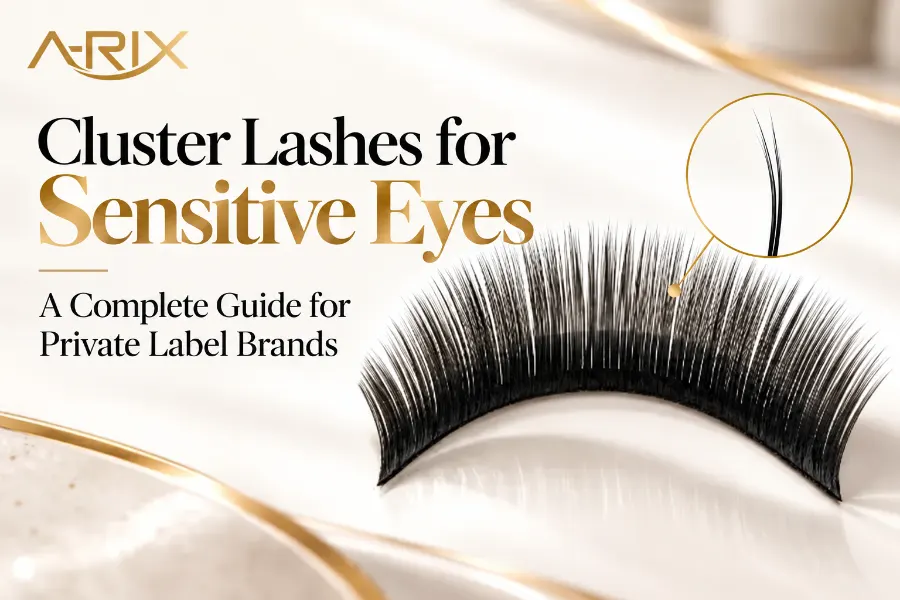
Band Construction and Fiber Performance
Inspect the Cluster Base
Base – contact and placement area. Examine for uniform thickness, smooth edges, secure fibers and consistent segment form. Insufficient attention to this area could result in items that are difficult to place and uncomfortable to wear. Approve production samples with close-up photographs of all surfaces. Inspect representative samples with a magnifying glass prior to approval.
Balance Flexibility, Weight, and Style
A flexible, low-profile base and appropriately distributed fibers can support a more natural-looking finish and easier handling. Wispy and light-volume designs may suit brands positioning a beginner-friendly range, whereas dense or dramatic styles can require greater care in mapping and application. Evaluate each proposed style in the actual intended placement method; do not assume that one sample represents the performance of the full collection.
Specify Length and Curl Consistency
Mixed-length clusters offer flexibility for customized lash mapping, provided that fiber lengths, curl profiles, and density remain consistent from tray to tray. Record the approved length sequence, curl designation, fiber finish, base dimensions, and style reference in the product specification. These details provide objective checkpoints for production approval and future reorders.
Adhesive, Application, and Packaging Evaluation
Distinguish Lash Construction from Adhesive Claims
Lashes that are intended for customers with sensitive eyes must not be promoted as if they were a medical product and suitable for every customer. For standard clusters of lashes check the separate adhesive or the adhesive that is recommended for this specific lash style. For pre-glued lashes check the bonding material that is already applied to the lashes as part of the finished product. Check the relevant ingredient information, warnings for use, application and removal of the product as well as required documentation for the respective destination country. If no adhesive is included in the product, clearly state this on the packaging and specify the type of adhesive that is compatible with the lashes. Do not create the wrong impression that the product is suitable for every customer.
Validate the Complete Retail Kit
Evaluating the clusters, applicator, adhesive or pre-bond system, tray and the instruction leaflet as a whole is essential. We test for example the pickup of the cluster without deformation, the accurate placement of the cluster, the base contact of the cluster, the identification of the cluster and the removal of the cluster from the packaging material in accordance with the given instructions. A dated and approved reference sample and the corresponding approval specifications have to be kept by production and buyer in order to check the same articles.
Design Packaging to Protect the Product
Our packaging has two functions: presenting the product in an attractive way and protecting it in transit. The tray should hold the clusters without buckling the fibers, and the outer packaging should be able to withstand normal use. A-RIX customizes the packaging for you, and can offer you a choice of different retail presentations. However, before you place your order, please check the following regarding the packaging for your specific project: tray design, artwork, packaging materials, print finish, minimum order quantity and delivery time.
How A-RIX Supports Sensitive-Eye-Oriented Lash Development
A-RIX is a more than 20 years experience manufacturer of eyelashes. It has over 15 years experience in OEM/ODM services. For private-label cluster lashes, A-RIX’s development team can make customized designs of eyelashes in terms of style, fiber, length, curl and packaging for DIY cluster lashes, strip lashes, lash extensions, and other accessories.
We’d start by asking to receive a set of samples of the following types: natural, wispy, fuller-volume. Also packaging concepts and proposed consumer usage instructions would be helpful to review. This would give us a sense of how the samples handle, how consistent in look they are, how well they’d apply and how stable they’d be in the packaged tray. Note that the company’s published production process includes raw material inspection, in-process inspection and final pre-shipment inspection. However, it’s still the brand owner’s responsibility to approve the production sample and any product specific testing, labeling and market documentation required by sales channels.
Create a Reproducible Purchasing Specification
Document the Variables That Affect Wearability
Terms like ‘soft’, ‘natural’ or ‘comfortable’ need to be elaborated as manufacturing specifications. This would include details on segment width, base profile, fiber, finish, length, curl, density, color and intended application position. If a more understated look is required, please include approved reference images and a lash map. This ensures that samples are developed in line with the brand’s specific appearance objectives and user experience.
Make sure to clearly distinguish between non-negotiable requirements and optional design choices. While a flexible base and easy pickup may be core product requirements, a specific mixed-length configuration and/or packaging finish may be non-core design options that can be renegotiated based on factors such as cost, assortment size and/or package configuration, and recording the design hierarchy ensures that key performance indicators are not inadvertently changed.
Test the Unboxing and Application Experience
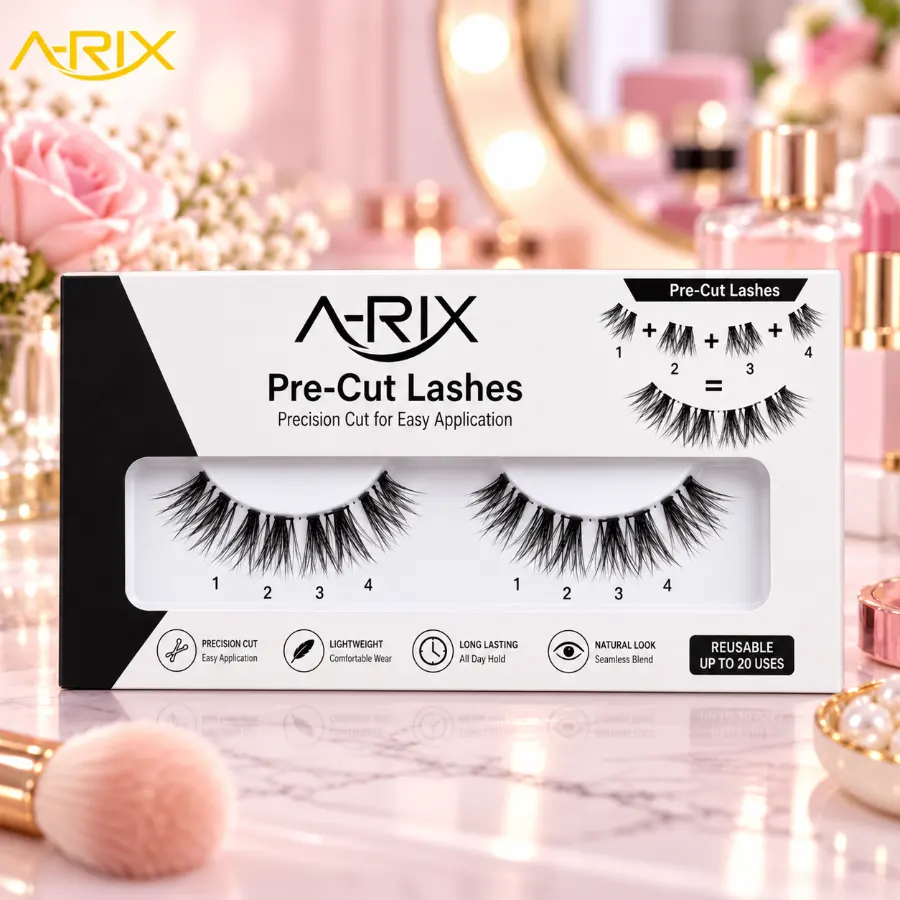
Even a good design can cause annoyance when opening and closing the tray, when lashes cling together or when it is not clear which are of which length. Testers should be able to open a retail pack, pick a number of clusters and follow the instructions for application and removal. Note problems with picking up lashes, with them deforming, not being able to identify a product, problems reaching the lashes with the applicator and with residue from previous use.
Interactions with packaging at the first point of contact with the online-first brand can have a huge impact on product reviews and repeat business. Test with your proposed retail tray and printed instructions rather than proffering temporary sampling materials. The small differences in the design of adhesive tabs, the spacing of the packaging in the tray and the packaging protection alone can have a huge impact on how the product behaves when it reaches the customer.
Analyze Feedback Without Unsupported Claims
Feedback from trials and post-launch tests should be organized by SKU, lot or batch number, application method, adhesive type, wear conditions and removal method. As previously mentioned, problems with lifting will likely be related to application method or adhesive, whereas frequent complaints about stiff edges are often a result of the base design itself. In this way, feedback can be used to target specific solutions at specific products, rather than having to change the entire assortment.
Early positive feedback does not necessarily mean that your product is hypoallergenic, non-irritating etc. and therefore suitable for people with sensitive eyes. All safety, performance and regulatory statements must be in proportion to the evidence you have for the finished product. Should any consumer experience any discomfort or have a reaction to a product, they must be instructed to cease use of the product immediately and seek advice from a suitable health care professional if required.
Prepare the Launch Around Customer Information Needs
Publish Clear and Verifiable Product Details
Descriptions of fiber and base designs, adhesives included or recommended, methods of application and removal, as well as practical precautions and what to do in case of discomfort should be clearly explained in the product listings. They should accurately reflect the actual SKU or kit being sold, avoiding ambiguous descriptions and application instructions that may differ from the product supplied by the retailer.
Accurate close-up images of the cluster base, the tray layout, the length distribution and the finished product in realistic lighting are more informative for B2B buyers than beautiful retouched images. Realistic images of the physical construction of the lashes also enable wholesale sales people to clearly distinguish between light-weight clusters, dense-volume clusters and full-band strip lashes. This is only possible when using consistent technical images.
Equip Customer-Service Teams with Product Knowledge
Enable customer service teams to differentiate between application difficulties, possible product defects and customer reports of discomfort or suspected adhesive reaction. Supply the team with SKU details, contents of kits, approved usage instructions and removal of products as well as an escalation process. Do not mislead customers as to the diagnosis of eye related issues and do not assure any individual lash style will suit every customer.
For issues investigated, record the product identifier and batch number as well as details of the adhesive, application method, wear time and removal method where this information is provided by the customer. Structured records allow for a consistent response to customers and provides the quality team with useful information to review the product.
Schedule a Post-Launch Performance Review
Review queries, returns, reported discomfort, tray damage, missing parts and repeat purchases by style or batch once you have had a meaningful volume of orders and feedback. If customers continually get the length map or curl designation wrong then perhaps re-labeling and re-wording the existing instructions would be more effective than introducing extra SKUs.
Conclusion
Lash clusters for sensitive eyes are not just about one single comfort claim. The entire process of product development must be controlled as a system consisting of base, fibers, glue, application/ removal, packaging for protection and constant quality from batch to batch. A-RIX Lashes offers a range of DIY-lashes as well as OEM/ODM, sampling and retail packaging. For every new product we create a final sample, approve it, check the claims and also the destination market compliance for each individual SKU. For the launch of a new range of products we would like to receive a written product brief from potential brands and discuss suitable styles, samples and packaging in detail.
FAQ
Q1. Are cluster lashes suitable for people with sensitive eyes?
The suitability of Individual Lashes can vary between individuals depending on a number of factors including the construction of the lash, the adhesive used, application and removal methods. A light, well made product may alleviate some of the wearability issues but does not necessarily mean it is hypoallergenic or non-irritating unless substantiated.
Q2. What should I request from a cluster lash manufacturer?
Could you please provide me with representative samples, fiber and base specifications, approved style and lash maps, packaging details and quality-inspection checkpoints for the respective markets. I would like to ensure that all the above information is included in the final production specification.
Q3. How do DIY cluster lashes differ from strip lashes?
DIY clusters are made up of individual segments, which can be placed in sections to create your own unique lash map. This is different from strip lashes, which are one continuous band of lashes and are treated differently in terms of how you handle them, where you apply them, what kind of adhesive you use and how you remove them.