A purchase order that says “10D, black, C curl” leaves quite a lot unsaid. How concentrated should the point look? Where does the body begin to taper? And which of the supplier’s samples is the one the brand actually approved? Those questions deserve space in a premade lash spikes brief, alongside the familiar length and curl fields.
Begin the discussion with the job this component will perform in the set. Is the point meant to be conspicuous, or should it sit more quietly within the surrounding texture? Keep the accepted sample when that discussion is settled. A supplier preparing another order can compare physical parts, whereas a collection name such as “wispy” leaves too much to interpretation.
This guide concerns professional extension products and the specification decisions behind a repeatable collection. It isn’t an application map or a recommendation about what a particular client’s natural lashes can carry.
Define What the Spike Adds to the Set
Separate a texture component from a complete look
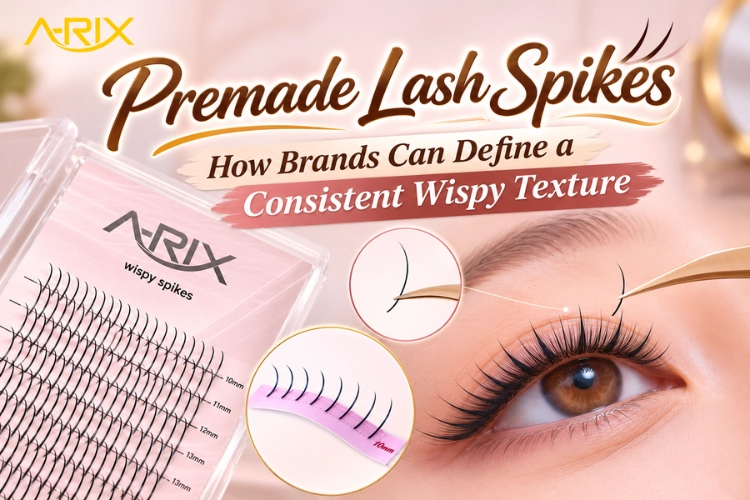
Premade spikes are concentrated, pointed lash elements used to introduce visible peaks into a design. The A-RIX 10D premade spike product is offered for professional wispy, wet-look, anime, and other textured sets. Its listing includes single-length and mixed-length tray options and customization of spike width, curls, and packaging.
Before putting several styling names on the box, ask what the lead SKU is being bought for. Occasional peaks in an otherwise soft set call for a different discussion from a design built around repeated dark points. A product team can explore both, but it needs to know which use the first approval represents.
Ask for a neutral product view alongside the styling photograph. A finished eye is useful context, but makeup, lighting, surrounding fans, and the chosen map all affect the result. Keep the product specification understandable without requiring someone to recreate that photograph.
Describe the gap between the spike and its surroundings
Place the same spike beside two different background fans and the visual judgment may change. That makes the neighboring product a useful part of the comparison record. Otherwise a buyer can prefer the second arrangement without knowing whether the spike, the background, or their combination accounts for the preference.
For development, keep one arrangement fixed long enough to compare the samples. Note which background product was used and which spike revision was being considered. The arrangement gives purchasing and production something concrete to discuss; a qualified artist must still make the client-specific application decisions.
Turn Premade Lash Spikes Into an Observable Specification
Record width at an agreed location
Write “narrow” on a sample request and there is an obvious follow-up: narrow where? Mark the location on a photograph of the proposed component. Then ask purchasing and production to read that mark independently. If they choose different points on the sample, the definition still needs work.
The next useful step is a demonstration of the measurement. Record enough of the setup to repeat it: which face is visible, where the component rests, and where the measurement begins. Discuss a tolerance after those details are settled. An unexplained measurement on a quotation won’t resolve an argument between two different methods.
Keep tip definition and base shape separate
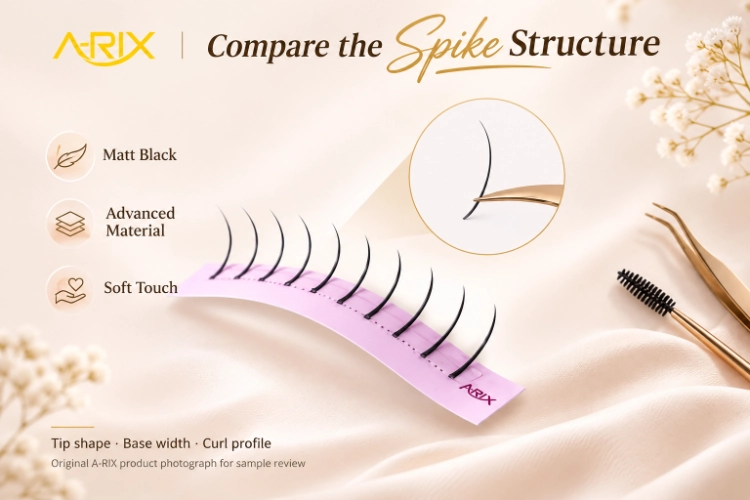
Give the tip and base their own entries on the review sheet. The tip is where the desired pointed outline should be visible. The base needs a separate look, including after pickup; approving the silhouette from above won’t answer every question about the attachment area.
An overall “good” beside a photograph doesn’t explain much to the person checking a later batch. Write down what was accepted at each end. Where the team can’t describe it yet, keep the point open for another sample discussion.
Compare curls from the same orientation
Turn the sample to the side before deciding whether its curve matches the reference. The front view is better suited to judging how concentrated the point appears. Keep camera position and lighting fixed for each comparison; moving closer to one sample defeats the purpose of putting the pictures next to each other.
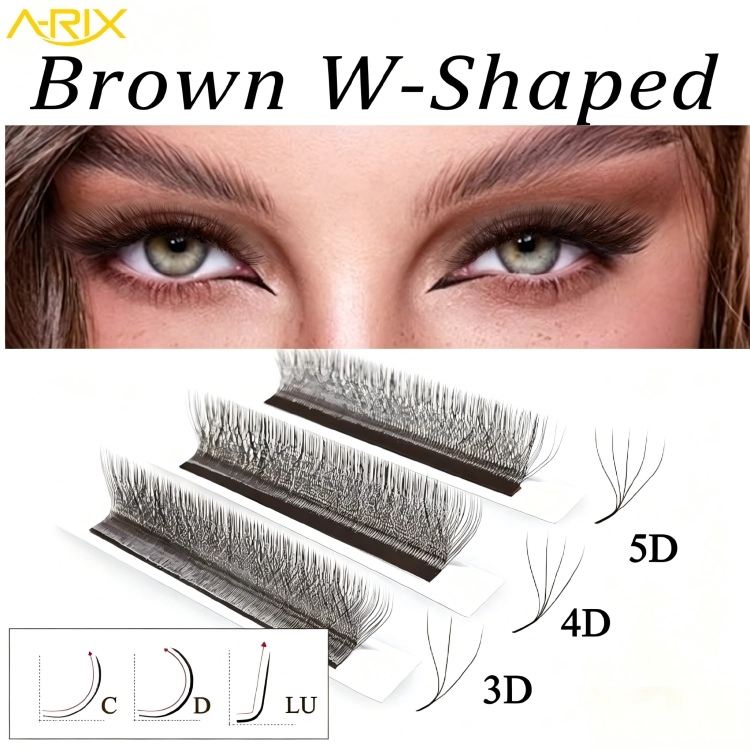
A-RIX lists PBT, black and brown, a 7–22 mm length range, and 0.07/0.10 thickness options for this product. These are development options, not a reason to launch every combination. Confirm the exact unit interpretation and the specifications selected for your order on the quotation and approved product record.
Build a Useful Approval Comparison
Review the component after pickup
Have a qualified professional demonstrate pickup during sample review, using the method agreed with the supplier. Retain any component that changes during the demonstration with its tray identification. That gives the supplier an actual part to investigate. The observation concerns handling at the bench; it says nothing about wear, comfort, or retention on a client.
Use a compact decision record
Keep the record close to the physical sample. A practical version contains:
- Product and sample identification, including the revision.
- Selected length, curl, color, and thickness designation.
- The location and method used to assess width.
- Front and side photographs with a consistent scale.
- Tip and base observations before and after pickup.
- The approval decision and any unresolved change request.
Don’t treat this as a substitute for an agreed inspection plan. It is a way to make the approval intelligible to another person, including someone who didn’t attend the development call.
Keep the Commercial Range Manageable
Change one feature when comparing versions
Take a request for a more defined point. Ask for that change on the current selected length, curl, and color before reviewing a whole new assortment. If the alternative arrives in brown with a different curve, a favorable response could refer to either change. The buyer would still lack an answer about the revised point itself.
Keep that comparison within product development. Artists still choose their own approach to a suitable client, while the buyer gains a baseline for reviewing later versions of the component.
The wider professional eyelash extension range can help a brand identify neighboring products for a collection. Keep their role distinct: the spike supplies a texture component; another product may provide the background density. Avoid describing them as interchangeable merely because both appear in a wispy set.
Write labels for the product that is actually approved
Two versions can arrive at a salon in otherwise identical packaging. Give the artist an identifying field that distinguishes them before opening, particularly when one contains a revised width. Put that field near the selected specifications. The familiar “10D” designation can remain, but it cannot explain all the differences between the two versions or the sets made with them.
Check the final listing image against the approved sample, including its tip outline. Identify enlarged views as close-ups.
Carry the Approved Structure Into Production
For A-RIX private-label work, the starting quantity is 1,000 boxes and mixed assortments are supported. Put the allocation beside the approved versions on the order. If a width or curl changes during planning, have it reviewed as a change instead of allowing the word “mixed” to hide a substitution.
The first sample dispatch is normally around seven days. Receiving it, reviewing it, and asking for a revision take additional time, so keep those activities visible in the launch schedule. A-RIX supports retaining a sealed sample, and bulk goods must be checked against that approved standard.
Bring the custom packaging into the sample review as well. A-RIX’s available formats include color boxes, blisters, and white cards, with packaging orders starting at 1,000 boxes. Look through the proposed window under ordinary light. If reflections or printed artwork obscure the point, the package needs attention even when the unpacked product is acceptable.
Questions Buyers Should Resolve
Is a sharper-looking spike always the better choice
There isn’t a useful single ranking from sharpest to worst. Compare the samples within the design role being developed. A pronounced accent and a soft background texture ask different things of the component, so the preferred version for one brief needn’t be the preferred version for the other.
Can a product photograph replace the sealed sample
Keep the photo as an appearance record and retain the component for physical comparisons. Someone investigating a later order may need to turn it, lift it, or place it against the new sample. A styled-eye screenshot offers useful context but can’t support those checks, especially if the underlying map and neighboring product aren’t recorded.
What should a brand send with its first inquiry
Include the intended professional use and a reference for the texture, then list the selected specifications and tray format. Mark which details are still preferences. With that distinction visible, the A-RIX OEM and ODM team can discuss the unresolved development work before an artwork deadline makes every change feel urgent.
Before sending the final brief, read it as someone who has never seen the mood board. Could that person identify the accepted premade lash spikes and explain why another sample differs? If the answer depends entirely on the word “wispy,” spend another round on the physical reference before committing to production.